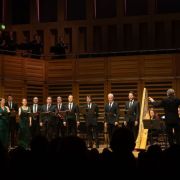
Raphaël Pichon‘s Bordeaux-based period-instrument outfit Pygmalion has reached the ripe age of 20. Their Monteverdi Vespers wowed the BBC Proms, as did their Mozart Requiem. On their 20th-anniversary tour, they were back in London for more Mozart, the Great C minor Mass, but with a twist. In a concert of just over 90 minutes – no interval or breaks between pieces – Mozart was joined by Mendelssohn, Schubert and even Bruckner. The connection? Well, in pre-concert remarks, Pichon talked about Mozart’s discovery of the music of Bach and Handel in the 1780s, and how that must have influenced his composition. It’s an intriguing thought to imagine Mozart hitherto unaware of, say, Bach’s Mass in B minor, and how that might have affected him. In the same way, Mendelssohn was deeply affected by discovering Bach, while Bruckner looked back even further to the Renaissance and Palestrina. Schubert – well, his youthful miniature is a canon, a musical technique as old as the hills – a little tenuous, but nevertheless a delightful inclusion in a thought-provoking programme.


The choir opened with Bruckner’s Christus factus est, and the 7-part Ave Maria which came later, were delivered with impeccable diction and precision, Pichon drawing out the long phrases, requiring impressive sustained control. There were moments of operatic drama, yet there was light and shade too. And the slow crescendo and decrescendo Amen in the Ave Maria was so evenly graded I’d swear they were being controlled by a dial. Meanwhile, Mendelssohn’s Miserere (actually a Kyrie) gave the four soloists the chance to whet our appetites, and his Da nobis pacem, allowed the orchestra to show off their warmest string sounds, with a beautiful baritone cello line. For Schubert’s Lacrimosa son io, soprano Sabine Devieilhe led an impassioned lament from the balcony, followed by chorus sopranos on stage taking up the canon, beautifully blended to great effect.
And then to Mozart. Without an interval, or even an applause break, the build-up of the programme so far added weight to the Kyrie’s arrival, its long steely lines emerging from the choral parts one by one. Pichon’s expressive shaping and use of dynamic extremes flowed logically from the sound world of Mendelssohn and Bruckner. Yet this never strayed into operatic excesses, with voices growing on top notes rather than relentlessly belting, as can be the way. Xenia Puskarz Thomas’ Laudamus te was joyful, matched by bright strings energy. Angular bite from the chorus in Gratias agimus was followed by perfect blend from Devieile and Thomas in the Domine Deus, then tenor Kieran Carrel joined the two women for a perky Quoniam, their runs well balanced with the orchestra, and with swing in the syncopations.


The double choir Cum sancto had lively precision, with many smiling faces as they enjoyed their deftly articulated fugal lines, and an electric Amen to finish. But a real highlight was the Et incarnatus est, the quartet of flute, oboe, bassoon and soprano Devieilhe exquisitely balanced. Often a big solo plus trio accompaniment, here, the four ‘voices’ sang equally, Devieilhe blending so delicately with the instruments. And then another surprise: in place of the absent Agnus Dei, we had Mozart’s oh so familiar Ave verum corpus, suddenly given a perfect home, the seated chorus singing its long phrases, muted strings tenderly accompanying. That moment of peaceful repose behind, it was full-on joyfulness to the end – a massive Sanctus and a racing, playful Hosanna, smiles all around again (including from Pichon). The solo quartet gave us a brief moment of their delicate blend in the Benedictus, before the final Hosanna ended with jubilant celebration.