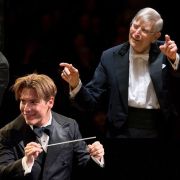
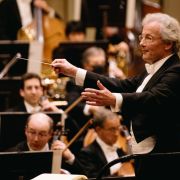
For their mid-July foray into French repertoire and Viennese fairy tale worlds, Lorenzo Viotti and the Vienna Philharmonic offered up Poulenc, Debussy and Zemlinsky at the Musikverein. It was a programme that shimmered with coloristic possibility and, by the end of the evening, genuine magic. If the journey began a little unevenly, it closed with a Seejungfrau of deeply satisfying sweep and concentration.

Poulenc’s Les Animaux modèles, drawn from his eight-movement 1942 ballet after La Fontaine, should ideally speak with acid clarity: clean attacks, lean textures, sharply etched character and a slightly cynical elegance. Here the Philharmonic’s sumptuousness was not always an advantage. The orchestra’s naturally rounded attacks softened a bit of Poulenc’s wit at the edges; clearly this was not repertoire which lay organically under their fingers. There were, however, brilliant moments, and the virtuosic romp of L’homme entre deux âges et ses deux maîtresses, showed the players at their most impressively agile.


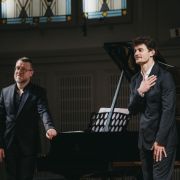
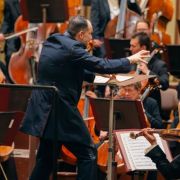
Debussy’s Printemps, composed in the 1880s and later orchestrated by Henri Büsser, suited them far better. From the exposed duet between flute and piano which opens the Très modéré, the precision felt significantly sharpened. The prominent use of four-hands piano provided an effective coloristic throughline within the orchestral texture, feeling especially fresh. In the following movement, Modéré, Viotti carefully shaped Debussy’s sequence of interlapping motifs – vignettes of light, haze, and tender melodic suspension – allowing them to collectively bloom to their fullest. Viotti, conducted not only with his hands but with his whole body, spelling out attack, atmosphere and attitude with a fully physical vocabulary.

It was, however, Zemlinsky’s Die Seejungfrau (The Mermaid) which won the evening. Based on Hans Christian Andersen’s fairy tale, it is a lavishly pictorial, generously scored work, still heard far too seldom in concert. From the dark, undulating opening first bars, the orchestra conjured an immensely dark, undulating sound world that seemed to rise from oceanic depth. The Philharmonic’s characteristic warmth and blend was ideal throughout, revealing new chambers of colour. The brass were magnificent; cavernous low strings and winds paired with glittering harps, and the atmospheric cymbals in the second movement was wonderfully eerie. Concertmaster Rainer Honeck’s extended solos, also notable in Debussy, were exceptional, although the entire gallery of principals had moments to make their marks. Viotti's command of the score's vast, sprawling architecture was solid, and he led the orchestra through a performance of fantastical proportions that was nothing short of magical; a stunning testament to a composer whose genius we are only just beginning to fully appreciate.