Why is English National Opera loosening its “opera that speaks your language” policy? To attract singers who don’t want to relearn a role in the vernacular? To save money on commissioning singing translations? Either way, here we have a German composer’s French opera at the Coliseum being sung as written (with English surtitles) and thereby setting a new precedent. Plus ça change, eh? If that’s the only storm to buffet this oasis in ENO’s autumn season, then youpi.

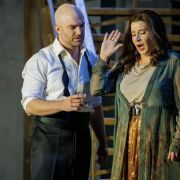
Lyndsey Turner’s unpretentious production of Iphigénie en Tauride succeeds on most levels and engages the heart in ways no amount of reimagined faffing could hope to do. The director’s secret is to match excellence with simplicity. Soutra Gilmour’s unflashy designs and functional costumes are set within a widescreen letter-box and lit by Tim Mitchell in an oaken chiaroscuro that on opening night dipped into a full blackout that stopped the show, literally, at the line “Hell threatens to swallow me up”.


Turner, not one for extraneous fussiness, is happy to create interesting stage dispositions and then leave them alone. If she needs to enhance the action she brings on dressers to change characters' costumes while they sing. Limp rather than limpid, this minimalist production style does leave ENO’s estimable choristers stranded and static within her low-cost, no-frills aesthetic. The show wasn’t trailed as one of ENO’s semi-stagings but if the cap fits… Still, once a clunkily exposition-laden first act is out of the way (oh, the Greeks and their Unities!) it is seldom dull.

The second of Gluck’s paired Euripides operas (the first was Iphigénie en Aulide) is a typically uncomplicated drama in which the title character almost executes her brother who murdered their mother who murdered their father. It’s that ‘almost’ that holds the key to the opera, for a celestial child appears at the last minute to stay her hand. This basic premise is fattened by a fervent bromance (with or without the ‘b’) between the killer brother, Oreste, and his beloved friend Pylade, and this turns the emotional screw towards a surprisingly happy ending.

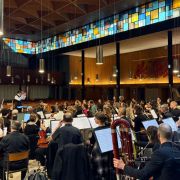
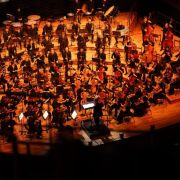
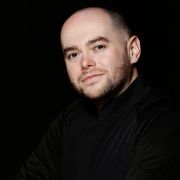
ENO has assembled a musical winged chariot for this brief but pristine run of four performances. David Bates, fresh from a splendid revival of Alcina for The Royal Opera, makes his Coliseum debut with comparably thrilling results and draws impeccable playing from the ENO Orchestra. Supported by some excellent artists in secondary roles the principal vocal quartet was outstanding, with baritone Jacques Imbrailo (Oreste) and tenor Nick Pritchard (Pylade) impassioned and unified as the loving men who bicker about who most wants to die, reminiscent of elderly ladies fighting to grab the bill in a tea shop. As the Scythian King Thoas, Morgan Pearse sang with a firm, haloed delivery that carried exactly the right degree of authority and even earned him a boorish ENO boo at the final curtain.


If Christine Rice in the title role sounded a little tired vocally, she can surely be forgiven after her hectic slate of productions in 2026, most recently headlining both halves of Welsh National Opera’s Bartók/Stravinsky double bill. Besides, an undertow of fatigue suits the role here and she used it to her advantage in showing just how the weight of Iphigénie’s dilemma, a proto-Sophie’s Choice moment, was her millstone.