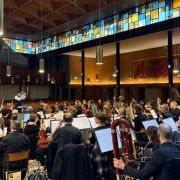
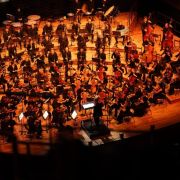
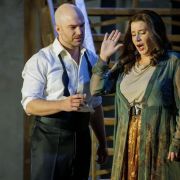
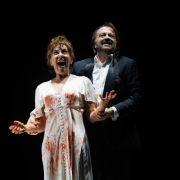
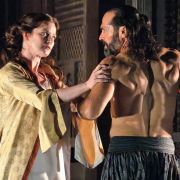
Let’s try again. Nine months after a calamitous stage production in Paris trashed Berlioz and Goethe so completely that the work of Jakob Lehmann and Les Siècles was smothered by its incompetence, these same musicians and choirs (the superb Chœur et Maîtrise de Radio France) brought La Damnation de Faust to the BBC Proms. They were joined by a stellar trio of soloists and together, in a resolutely unstaged performance, they proceeded to put matters right.

La Damnation de Faust is not an opera, even though it comes close to being one. The story arrives packaged in a succession of musical lumps, not unlike a modern musical with songs, set pieces and production numbers. Berlioz described the work as a ‘dramatic legend’, an apt definition for his fresco of aural tableaux... and aurally is the best way to experience it, as this thrilling account demonstrated.


As is their custom, the 75 members of Les Siècles played on instruments of the composer’s time – in this case 1846. Not only was a genuine ophicleide spotted in its natural habitat but the trumpets were valveless and the timpani were kettledrums with period plumbing. The orchestral sound had extraordinary lucidity and beauty, almost modern but intangibly other-worldly. The principal viola accompanied Marguérite’s unforgettable aria “Autrefois un roi de Thulé” with unusual eeriness while the woodwinds, especially the flutes and cor anglais, had a vivid limpidity that filled the Royal Albert Hall like a cinematic sound system. There were even times when Lehmann, a conductor of punctilious attention to detail and structure, dared to drop passages of sustained pianissimo into those wide open spaces and the music resounded as clearly as any fanfare.

French baritone Thomas Dolié, the only continuity soloist from last year to this, delivered Brander’s drinking song with such vim and brio that one wished his role had been bigger. Instead, three of opera’s big beasts took the lion’s share of a score that for the most part presents each of them in isolation and gives them a spotlight. Thus the great soprano Véronique Gens sang Marguérite, normally a mezzo role, with the dignity and a regal charm we have come to expect of her, while Gerald Finley, on diabolically splendid form and sporting a blood-red tie to accentuate his devilry, pitched his rich bass-baritone to give Méphistophélès a seductive edge with an unnerving patina of cynicism.


If John Osborn was slightly disappointing in the title role, it’s because his expressive tenor, atypically for this fine artist, was an unyielding instrument that hardened under pressure. As a result Faust’s great invocation, “Nature immense”, lacked plangency and lyricism, handsomely though it was articulated.