Ballet and fashion seem to be a popular match, though not so much in Japan. Dancer and choreographer Shohei Horiuchi (former Principal at K-Ballet Tokyo) and fashion photographer Yumiko Inoue first launched the project BALLET TheNewClassic in 2021. The idea was to create a gala performance with newly commissioned choreography, breaking the rules of classical ballet and with stylish costumes.

Although the initial performance was cancelled due to Covid, the galas took place in 2022 and 2024. Collaborating with fashion designers, stage directors, choreographers and musicians, the aim was to bring new audiences to the ballet. While the performances sold out, there were mixed reactions.
The third iteration of BALLET TheNewClassic was a little different from the previous ones in that Inoue and Horiuchi did the stage direction. Although they paid respect to classical ballet, they recreated some of the works with a different viewpoint and a twist. Not everything was entirely successful, but at least the works were challenging, visually stunning and they had clearly learnt a lot from their previous galas to provide an improved audience experience. The choice of participating dancers was excellent.


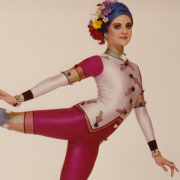
One of the most successful works was the Rose Adagio from The Sleeping Beauty, which was created for prima ballerina Shoko Nakamura, one of the best-known dancers in Japan. Choreographed by Horiuchi, the concept was that Aurora is not a 16-year-old princess but a mature woman, reflecting the actual age of Nakamura in her mid-40s, and this adagio symbolises a rose in full bloom about to fade away. Nakamura, dressed in a glamorous red gown, was partnered by her admirers, seven dancers, both male and female and in dark unisex costumes. She was absolutely gorgeous and her expressive movements represented her maturity as well as her journey as a ballerina. The Tchaikovsky score was arranged by Junko Hata and with rose petals falling from the ceiling along with the lighting, it created a striking effect.

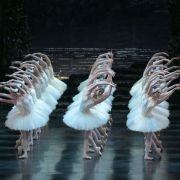
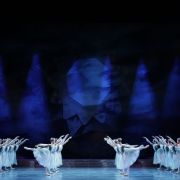
Another bold re-working of the classics was Swan Lake Act 2 pas de deux danced by Sena Hidaka of K-Ballet Tokyo (one of the best Odettes in Japan with her long limbs, polished technique and expressiveness) and Mizuki Nakamura of National Ballet of Japan. This pas de deux was not about Odette and her Prince, but about two swans who dance together, focusing on the sheer beauty of movement. There were no tutus with both dancers wearing thin, almost transparent white unitards decorated with feathers, which looked identical at first. There were 15 acrylic boards surrounding the stage that acted as mirrors, reflecting the two swans in multiple visions. Hidaka’s delicate, ethereal movements were breathtaking.

There was also a Coppélia (who was an AI doll) pas de deux and three solo works which were all original choreography. Horiuchi’s creation for Charles-Louis Yoshiyama of Zurich Ballet (titled Charles) was unique. Yoshiyama was clad in a huge hand-knitted cape by fashion designer KAKAN which he gradually peeled off in a powerful and soul-rending solo. Vienna State Ballet’s Kentaro Mitsumori’s solo Every Time I Feel The Spirit choreographed by William Dugan was accompanied by gospel singer Marisa. Dressed in a flamboyant bright orange costume (also by KAKAN), Mitsumori’s cat-like movements were sometimes like a rock star or a drag queen, but within the style of a classical dancer.


The only pure classical pas de deux was Don Quixote presented by two rising stars of American Ballet Theatre, Yoon Jung Seo and Takumi Miyake. They gave us the sheer joy of watching ballet with their show-stopping virtuoso technique. What a brilliant dancer Miyake is, not only because of his high and clean jumps which always make the audience gasp, but his well-controlled pirouettes had so much grace.
The latter half of the gala was called BALLET Lesson in which all the dancers started their daily routine at the barre with a DJ on stage as well as the piano. Their exercises turned into lively duets and hip-hop inspired dance, with each of the men showing off their jumps and pirouettes and the women showing us male inspired manèges. There was simply so much fun happening on stage. The costumes designed by mister it. added a playfulness and a party-like celebration of dance and art.

Some of the choreography may not have been memorable enough, but there were several moments of exceptional beauty on stage. All the works were visually impressive as was the lighting designed by Yuka Hisamatsu adding light and shade effectively. Making use of the stage elevation also created a stark atmosphere. It was a breath of fresh air within the rigidity of the ballet world here and the audience, largely made up of non-regulars, reacted enthusiastically to everything on stage.
POLA presents BALLET TheNewClassic 2026