At the front of the stage, surrounded by a set of drums, the soloist stood like a deity of thunder, ready to unleash rolling tempests. The evening opened with a contemporary concerto for timpani and orchestra which was a rightful piece to celebrate the final season of NDR Elbphilharmonie Orchester’s loyal chief timpanist, Stephan Cürlis.

In reality, it is safe to say the composition is actually a dual concerto shared with the harp. No matter how meticulously one adjusts the mallet heads, swapping hard felt for soft for example, the timpani’s pitch range remains finite, apparently lacking the capacity for true melody. The musical texture was defined by a constant game of cat and mouse: aggressive pushes from the strings yielded to brief, songlike lyricism, while the harp filled the harmonic vacuum, casting a glint of melodic radiance across the upper register.


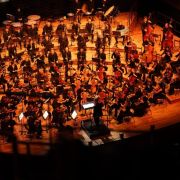
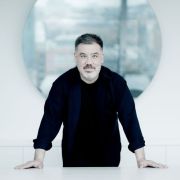
Clad in relaxed attire, Cürlis maintained a fluid yet precise posture as he forged a dynamic dialogue with an orchestra pared back to a pure, full string section. Timpani cadenzas in the second and third movements challenged the audience to engage with the music through a purely rhythmic lens. Ending a distinguished career by championing a work from 2023 in his farewell season is an enviable feat of artistic courage. Yet, despite James Oliverio’s obvious efforts to push the instrument's expressive boundaries, the work remains largely constrained by the nature of the instrument itself.
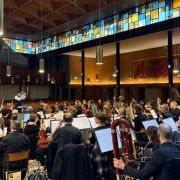
If the first half celebrated the majesty of a thunder god, the second half plunged into raw volcanoes with Mahler’s Sixth Symphony. The orchestra gave everything, yet the performance left a distinctly unsettling impression. Musicologists would certainly scoff at the cliché of tying the piece directly to Mahler’s biography, yet one could instinctively feel that the music flowed from the pen of a man deep in trouble.

The gigantic first movement tried to keep up the appearance of a classical sonata, but the sheer tension inside almost tore that frame apart. One got a brief moment of peace in the following Andante, though even the cowbells couldn't shake off that lingering gloom. The third Scherzo started with a driving rhythm, but that momentum was soon swallowed up by a weirdly unreal Trio section. By the time of the finale, we were right back to the heavy world of the opening. But this time, with the hammer blows ringing out, it felt much raw, wilder and a lot more brutal.


Alan Gilbert was clearly tough-minded. He conducted the orchestra restlessly, holding back nothing and letting the dark energy pour right out. Even as early as the third movement, a few musicians started to wipe sweat from their foreheads. The NDR Orchester played like a powerful combustion engine, driving this 90-minute giant forward with iron determination. Still, to truly enjoy a massive 120-year-old monster like this, you really need a strong heart and plenty of physical stamina yourself.
This concert was promoted by the NDR.