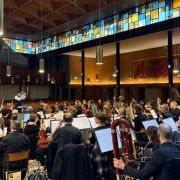
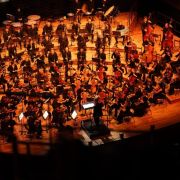
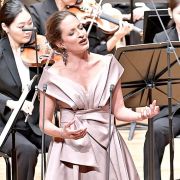
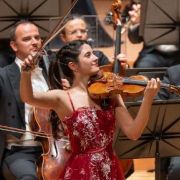
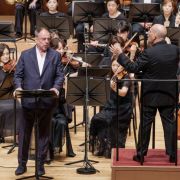
At Seoul Arts Center, the Staatskapelle Dresden and Myung-Whun Chung seemed to bring in the air of the Semperoper, letting an old orchestral accent speak without translation. Carl Maria von Weber’s overture to Der Freischütz began at the edge of audibility: strings pared down to breath and pressure, horns entering with a warm call that refused heroics. Chung built theatre by pacing and colour rather than decibels; climaxes widened without glare, and the close, dimming into hush, felt like a door eased shut.

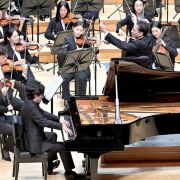
Robert Schumann’s Piano Concerto in A minor carried a quiet historical resonance. The completed work premiered in Dresden with Clara Schumann as soloist, and tonight’s orchestra stands in the lineage of that city’s ensemble. Later writing often praised Clara less for display than for a performer’s restraint in the service of the score. Yunchan Lim’s approach hinted at that ethic without turning it into commentary.


In the opening Allegro affettuoso, his plunge answered the orchestra’s dominance with firmness but no bravura – syntax rather than proclamation. The piano seldom sought the spotlight, moving through winds and inner strings as a voice granted extra freedom. When the oboe offered the four-note motto associated with Clara, Lim shaped it like speech: slightly spaced, gently tapered, hesitation left intact. He controlled the swell and release so that even soft phrases kept their line, pedalling in half-shades that bound without blur. The result was virtuosity translated into legibility; transparent, yet still warm with the work’s private heat.
In the development’s Andante espressivo, where piano answers clarinet in slowed reflection, Lim kept the pulse steady while making time feel pliable through voicing and shade, turning rests into thinking spaces. A glance towards the principal clarinettist was enough to set an entire phrase inside a shared breath, and concerto scale briefly receded into correspondence; public form carrying private sentences, like chamber music glimpsed through a half-open door, with Clara’s poise and Robert’s fever both audible.
The orchestra stepped aside, leaving the piano alone in the cleared space. The cadenza arrived not as display but as clarified speech. Lim unfolded the just-spoken conversation on the palm of his hand: arpeggios laid out with unflinching transparency, every strand tethered to a clearly profiled bass, motifs stacked so logically that the orchestra’s return sounded like consequence. In the Intermezzo he kept the dynamic ceiling low, thinning the left hand to open air when the cellos took the melody.


That humility sharpened the attacca into the finale’s Allegro vivace. Schumann’s hemiolas and syncopations locked with tactile precision; every semiquaver spoke, yet momentum never stiffened. At the coda, the orchestra’s off-beat punches flashed. As the right hand traced a spiral, dissolving weight into fresh air, the ending felt less like a conclusion than a first breath. It was not the confirmation of a summit, but the first arrival in a territory of interpretation still without a name.
After the interval, Antonín Dvořák’s Symphony no. 9 “From the New World” was refracted through a Central-European lens. Chung resisted brashness, favouring breadth without bloating; woodwinds spoke by profile, brass arrived burnished rather than hard-edged. The Largo’s cor anglais soliloquy floated on strings kept beneath it, pulse intact even at the softest dynamic. Yet the larger spans felt less inevitable than what preceded: the string body sometimes missed the last degree of weight for Bohemian ballast, and a couple of late tuttis leaned towards brass heft. Still, cyclic recollections were kept lucid and the last chord was allowed to fade rather than triumph, a farewell more contemplative than combustible.