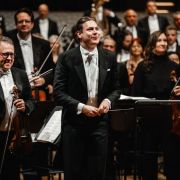
With Janine Jansen out of action with an injury, Vilde Frang stepped in to join Lahav Shani and the Munich Philharmonic in Hamburg for an all-Russian evening. Shani only officially took over as Chief Conductor this season, but the mutual support and trust between the conductor and the orchestra came through unmistakably.

Shostakovich’s First Violin Concerto covers vast emotional ground, opening in a depressing mood. Frang entered with a nasal timbre and started a lonely journey. Ghostly, silver strings held the music back for a long stretch. The sound felt stagnant, like a heavy mist that made breathing hard. In her high register, Frang sang with a fragile edge beside a hollow, expressionless harp. Low notes from the woodwinds deepened the bleak scene, and empty harp notes closed the movement.


The second movement flipped the picture completely. Agile running passages on strings pushed against grotesque woodwinds over a rustic rhythm. Frang’s sound turned sharp and coarse. She ran with endless energy against a frantic tutti, turning the space into a carnival feast.
Brass opened the third movement with a majestic, threatening theme. Against that weight, Frang drew out long, almost vocal-like lines. Shani shaped the accompaniment with light breathing, supporting her as a diva. After a massively progressive build-up reached a saturated climax, the music dropped back. We were suddenly in the solo violin’s solitude in a wild landscape. That long monologue settled over soft timpani rolls.
Over a perpetual-motion string pulse, the orchestra and Frang together made a dazzling show of the finale. Adrenaline surged before the music snapped shut in a sudden storm. After such an intense emotional journey, Frang offered an extensive encore: Amabile from Eugène Ysaÿe’s Violin Sonata in G minor, Op.27, no.1.

After the break, Ravel’s orchestration of Mussorgsky’s Pictures at an Exhibition felt more like a comprehensive demonstration for the orchestra. The performance carried strong drama and vivid quasi-operatic imagery. Shani’s take on several Promenades stood out right away. He likely skipped the passage before Limoges for dramatic reasons. Even so, he brought out the theme’s range of colours, shifting from stately to lighter, and then returning after the Catacombs.


Individual pictures showed both polish and rough spots. The low section in Gnomus felt slightly muddy, though the grotesque mood still came through. The Old Castle pulled the audience in with an intoxicating melancholy. Tuileries had plenty of springy articulation. Bydło built into something grand, even if the brass statement hesitated a bit. In Catacombs, the brass sounded imposing, yet missed some mystery and otherworldly feel.
To be sure, those were only small flaws. Baba Yaga threw sparks everywhere with nothing held back. By the time The Great Gate of Kiev arrived, the music sounded tall and imposing. At that moment, you cannot help thinking that a monument made from human creativity and imagination outlast any physical building, free from the threat of gunfire and destruction.
Right at the end, the orchestra threw in a brisk one-minute Trepak from Tchaikovsky’s Nutcracker. The unstoppable speeding up gave the whole hall a joyful finish.