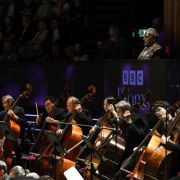
A revelatory Prom of the Second Symphony two seasons ago gave notice of Ryan Wigglesworth and the BBC Scottish Symphony Orchestra as Elgarians to be reckoned with. They confirmed that impression with an equally illuminating First at Wednesday’s Prom. The opening theme, Elgar at his most Edwardian with all the ambiguities which come with that association, lacked nothing for the nobility of feeling traditionally prized in this music, while infused with a lightness of touch and urgency of phrase which pulled the symphonic argument onwards and forwards through a development as tempestuous as a Turner seascape.


In turn, Wigglesworth’s grasp of the bigger picture served to throw the expressive weight of the symphony on to the Adagio; and ultimately to illustrate why contemporary Germans such as Hans Richter and Richard Strauss lavished praise on Elgar, at exactly the time when the idea of England as ‘The Land without Music’ was taking root more in English than Continental consciousness. Refinement and restraint can co-exist with rich legato, the BBCSSO strings demonstrated during that Adagio, much as it can and should in a successful Eroica, and the finale gathered life-force with a Beethovenian strength of purpose.
We experience music as lived memory, our own as well as the composer’s, and the enduring eventfulness of the Proms makes the festival into an archeological site where a new layer accumulates every year. This Prom opened with a revival of Judith Weir’s Moon and Star, which both aroused warm memories of the first performance in 1995, while also pressing home Wigglesworth’s confidence as an interpreter in taking modern music and making it dance with the fluidity of a classic, much as he did with Birtwistle’s Earth Dances last year.
Distance and enchantment go hand in hand in the best of Weir’s music, not least Moon and Star. Instrumental gesture and vocal declamation (from the BBC Singers, as in 1995) embody the sidelong wonder of Emily Dickinson’s poem, and luminous major-key chords are never quite so simple as they sound, much like a rhyme such as “Ah, Moon – and Star! You are very far –”.


In that sense, delightful in itself, Moon and Star also set the scene for a real first performance, of a new song-cycle by Brett Dean. The World’s Wife sets five poems by Carol Ann Duffy, giving speculative voice to silent female figures of myth and history, from Medusa to Mrs Darwin. Not the least appealing element of Dean’s Hamlet opera was its stratum of black humour, and he has admirably translated Duffy’s absurdist wit and imagery into sound (skittering strings like Medusa’s writhing locks). The use of found material (here The Shipping Forecast) is an old strategy of Dean’s, still an effective one; less so the speech which rather self-consciously frames the songs. Still, Claire Booth brought this unlikely gallery of heroines to life with magnetic charisma as well as soaring strength of tone above the stave, and sometimes deep below it. I hope I don't have to wait 31 years to hear it again.