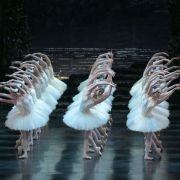
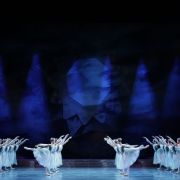
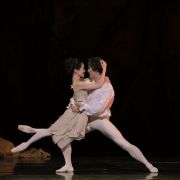
National Ballet of Japan’s triple bill Ballet Coffret 2026 showcased the more contemporary elements of the company's repertoire, featuring two 20th century works and one 21st century work. Not exactly new but rather modern classical works that focused on strengthening the versatility of the company.

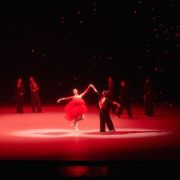
5 Tangos by Hans van Manen was a company premiere. He sadly passed away last December and was paid a tribute in the curtain call with his portrait projected onto the backdrop. Astor Piazzolla’s tangos and the choreography were carefully merged together to create an exciting, sensual and passionate interplay between the lead couple and twelve ensemble dancers, without the usual social dance movements. The van Manen trademark arm positions, the intricate footwork, restrained sensuality was there on stage, although at first the dancing seemed a little too neat.


On the first night, the lead couple was danced by Ayako Ono and Yudai Fukuoka with panache. Fukuoka was on fire in the Vayamos al diablo solo. It was virtuosically danced with masculine charm and dynamism. Ono shone when she was surrounded by the male dancers and led them. The tango between two male dancers (Yoshito Kinoshita and Kenta Hara) in the fourth movement was intense and made the audience imagine many stories of their relationship, as they were joined by two women afterwards. I wish this had been danced to live music!

David Dawson’s A Million Kisses to my Skin entered the repertoire in 2023. Featuring expansive movements, off balance, complicated partnering and extreme extensions at high speed, this ballet showcased the versatility of the dancers who usually dance mostly classical roles. The six female dancers and three male dancers, some of whom were new to this ballet, were dressed in Yumiko Takeshima’s leotards that showed off the lines of the dancers beautifully. The entire cast executed the choreography very musically to Bach’s Piano Concerto Op.1 (brilliantly played by pianist Yusuke Takahashi). Especially good were Miho Naotsuka and Takafumi Watanabe as the main pair. Naotsuka had such poise, clarity and confidence in her movements. Yui Negishi too, had the boldness and the airy leaps that slice through space. It was a luxurious and stunning performance creating gorgeous shapes and filled with the joy of dance.

George Balanchine’s Theme and Variations closed the bill. This 1947 masterpiece entered the company’s repertoire in 2000 and has been performed on a regular basis. Set to the final movement of Tchaikovsky’s Orchestral Suite No 3, the blue-based designs by Ryozo Makino are classical and grandiose, as are the blue and white tutus by Masako Ooi. A celebration of Petipa and Tchaikovsky with the clarity of movement, marvellous musicality and grace, it brought a feast of sumptuous dance in the finale. It has been an audience favourite since it came into the rep.


The lead dancers Yui Yonezawa and Shogo Hayami dominated the stage. As the most virtuoso danseur of the company, Hayami nailed the fiendishly difficult solo which includes multiple consecutive tours en l’air. He attacked it explosively but with soft landings and light ballon and his partnering in the pas de deux was exemplary with evident respect to his partner. Yonezawa was glorious and assured, a class act with crisp turns, refined elegance and every single movement expressing the music. Even the most complicated steps and balances looked effortless. We are so lucky to be in the same era as this extraordinary ballerina. The ensemble in this ballet was mostly made up of the younger dancers of the company. Because of this many were inexperienced so there were some wobbles that were unexpected – there have been better performances by the ensemble in the past. Nonetheless Yonezawa and Hayami were transcendent and the audience gave the company a standing ovation and loud applause.