If Simon Boccanegra has traditionally been regarded as a difficult story it’s because its title has created a point of view problem. Verdi’s psychologically searching opera, featuring some of his darkest and most modern writing is not just a political thriller but perceptively parallels the battle for political self-determination with the story of a woman’s identity. Verdi uncovered more than than many would give him credit for about the constraints of patriarchy, and in Jetske Mijnssen’s fresh and dazzlingly chiaroscuro production, dramatically lit by Valerio Tiberi and set in the patriotic roilings of the Risorgimento, the story couldn’t be clearer. Love is not control.

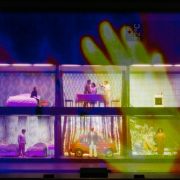
In a triumphant finale to an already stellar season, Dutch National Opera has fired all the big guns at once with a glorious cast and a dream team to create the perfect fusion to delight traditionalists and modernisers alike. Etienne Pluss’ simple device of trisecting the wide stage exploits the dramatic irony of the score, keeping Federica Lombardi’s sublime Amelia at the heart of the plot. Characters move between scenes and scenes turn on a hair as the forces of history press in on the family drama. Murky politickings are contrasted with the astounding beauty of Maria’s tomb, the peaceful morning light of Amelia’s schoolroom – yes, Mijnssen has give her an identity and an important public role – and the stunning scene for her nuptials, the whitest wedding you will ever see. One of many poignant moments created by Mijnssen, as Boccanegra dies, his daughter’s pupils, all ready for their role as bridesmaids, breeze across the stage as free as the wind, a fleeting glimpse of carefree girlhood.


Hannah Clark’s costumes are a gorgeous bustle of Belle Époque bows, high necklines, tight sleeves and bodices, every woman on the stage weighed down with sumptuous fabric and firmly buttoned in. DNO’s phenomenal chorus – several yards deep – appear first in dun-coloured plebeian garb and later in lacquered funereal black and blinding white.

Fabio Luisi conducted the Royal Concertgebouw Orchestra and they were breathtaking, finding every contour in Verdi’s characteristically rich dramatic texture, from feathery strings, thrilling with tension to the pomp of martial brass and bass drum, and climactic choruses as the clamour of populism competes with the human drama at this opera’s heart. The anguished climax at “Padre” and again “Figlia” were almost overwhelming, a reminder that this is an opera about societal strains on the filial bond by a man long devastated by the loss of his own wife and children. There is desolation aplenty in this story and some of the most arresting vocal writing is unaccompanied, as characters find themselves marooned in their own thoughts and fears.

In what is perhaps Verdi’s most luminous role, Federica Lombardi was absolutely radiant as Amelia, her “Come in quest ora bruna” sung to her enthralled pupils as she gently enlightens them about the world beyond the schoolroom, was heart-stopping. Georg Zeppenfeld’s richly resonant bass expressed the utter desolation of Fiesco’s grief. In this carefully constructed scene, the bond between loving father and daughter is holy: untouchable even by the darkness of loss. Riccardo Massi was glorious as Amelia’s lover, Gabriele Adorno, ardent and unaware. As befits a man on whom greatness has been thrust, George Petean’s Boccanegra never quite dominated – Massi was more than a match – but with each new discovery about his situation a different tone colour emerged. German Olvera was perfectly cast as the scheming Paolo Albiani, egged on by Jasurbek Khaydarov’s hothead Pietro.


Everything about this production is fresh and wonderful. Mijnssen draws characters out novelistically, sometimes playing against the libretto to give Amelia a clearer expression of her own agency. As power drains from the dying Doge, the question is, will the people live freely with a new man in charge? The final scene is a coup.
Eleanor's accommodation was funded by Dutch National Opera