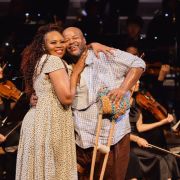
Indiscriminate gibes at the bogeyman of opera productions – Regietheater – usually leave me sceptical. Not only can I testify to seeing excellent stagings that had very little to do with the librettist’s instructions, I also believe that for those who favour a painted-backdrop, singing-to-the-audience night at the opera, there are already valuable productions being staged regularly in almost every theatre. There are cases, however, that test even my strongest convictions. Unfortunately, Lydia Steier’s production of Spontini’s La Vestale, new to the Staatsoper Unter den Linden, is one of them. Only partially salvaged by conductor Carlo Rizzi and star soprano Sonya Yoncheva, Steier’s staging is unclear in its intentions and disappointing in its rendition.

To Steier’s own admission, it took her a few listens to find charm in Spontini’s music. Indeed, La Vestale is mostly an object of curiosity for avid Maria Callas aficionados – like me – and musicologists who inspect it as the embryo of later music developments – in a way, still me. Looser musical forms, which strain the distinction between arias and recitatives into frequent ariosi, suggest an internal mobility that tries to be theatrically compelling, but sacrifices chances of melodic openings. The result lives in a limbo that is neither great theatre nor memorable music.


Steier’s production doesn’t help the opera. In an imaginary theocratic totalitarian regime inspired by The Handmaid’s Tale and real-life dystopias, the cult of a nonspecific ‘Virgo’ is tied to a ruling military dictatorship and somehow – the details remain unclear – instrumental to preserving the status quo. The cult has a strict hierarchical structure and prescribes life-long chastity, punishing any disobedience severely. Brutal spectacles are everyday occurrences. Access to knowledge is heavily filtered and obstructed. In this scenario, the ‘eternal flame of Vesta’ is kept alive by the burning of books considered subversive.

When applied on top of Étienne de Jouy’s libretto and Spontini’s music, this type of commentary aggravates its shallowness with contradiction. The clash between the composed, optimistic spirit of the original and Steier’s snarky pessimism originates the effect of a three-hour-long Tarantino sequence where torture is accompanied by a Beach Boys song. No doubt, this sarcastic contrast is intentional; however, that doesn’t make it any more interesting or effective. Undermining de Jouy’s deus ex machina happy ending by suggesting Cinna’s coup via the murder of the Great Vestal is the final cherry on top of a frankly erratic cake. On Steier’s side are at least Etienne Pluss’ sets, a partial reproduction of the Grand Amphitheatre at the Sorbonne, which give depth to the stage and allow for complex crowd movements.
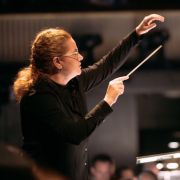
Already from the overture, Carlo Rizzi produced a suitably grainy sound from the Staatskapelle Berlin. His interpretation was meticulous and, in the absence of virtuosic orchestral passages, could focus on bringing out the score’s finer details. Touches of colour from solo instruments, like the horn in Julia’s aria in the second act or the frequent dialogues between woodwinds, went together with some controlled, balanced dynamics. More importantly, Rizzi nailed down the pace and structure of Spontini’s score, creating small pockets of discreet melodic focus and letting them blend one after the other in a continuous flow.


Sonya Yoncheva's debut as Julia carried all of her distinctive traits: an intense approach, reliant on a round middle register and characteristic vibrato. Whether this fits the role stylistically is ultimately a matter of taste. The first act was arguably her weakest, with some overly legato phrasing smudging the clarity of some passages and her vibrato a little too prominent in the high register. The following two acts marked an improvement, both scenically and vocally. To Yoncheva’s credit, it cannot have been easy singing writhing on stage while being flogged.

David Butt Philip has a dark, somewhat throaty tenor which brings him close to spinto territory. If the role of Licinius is thankless due to its relatively high demand and low pay-off, Butt Philip still sang with confidence and precision, adapting well to Spontini’s vocal writing. Marina Prudenskaya looked almost unrecognisable as the Great Vestal, but her signature resonant low register and expert stage presence were enough of a trademark. Siyabonga Maqungo’s Cinna confirmed the impressions left by his latest performances at the Staatsoper: a warm, well-projected tenor to which high notes come easily. Lastly, the Staatsopernchor was in its best shape, in perfect control of beautiful harmonic textures and a fair amount of volume.