Isn’t it time to bar opera directors from contributing programme notes? If you really need three pages to justify or explain your production, you’re not doing your job. Spanish director Rafael R Villalobos is the latest to fall foul, explaining why Un ballo in maschera is a problematic work that requires his solving in a new production at the Staatsoper Unter den Linden (a co-production already seen in Valencia). Verdi’s opera, we are told, is a ripe target for cancel culture because of its racism, cultural appropriation and dodgy LGBTQ+ politics.

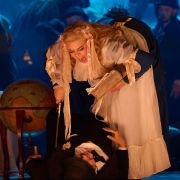
In the opera’s Boston setting, Ulrica was originally described as a negro fortune-teller. The role has been sung by several Black mezzos, notably the great Marian Anderson, but when is the last time anyone blacked up for the role? If a director is queasy about the colonial setting and its connotations, why not head back to the Swedish version Verdi had first intended? There she is Madame Arvidson, a genuine historical figure, Anna Ulrica Arfvidsson, professional fortune-teller during the reign of Gustav III. Here, Villalobos circumnavigates the problem by having Ulrica directing a cable television show, where a Black woman mouths her tarot card readings.


Villalobos also has a problem with the page Oscar being sung by a woman. Ignoring the long line of trouser roles in opera, from Cherubino to Octavian, he not only makes Oscar a girl who cross-dresses but turns the character into the “son” of Renato and Amelia. Oscar here, we learn, was “assigned the female sex at birth” but “is driven by a lack of paternal support and love to a schizophrenic state of gender dysphoria.”

The director latches onto the theme of masks and how contemporary society chooses to present itself both in reality and in the media, which could be fruitful if it went beyond a few TV monitors dotting the bombed set, Riccardo giving a press conference and a cameraman filming his dying moments as Ulrica delivers the “death” card. The Berlin audience gave Villalobos and his team a frosty reception.

Musically things were stronger. Enrique Mazzola, making his Staatsoper debut, evidently loves Verdi’s score, which is packed with great arias and ensembles. Sometimes he loved it a little too much, milking the Staatskapelle Berlin extravagantly in the big moments, but when the playing is so great, it’s a forgivable indulgence.
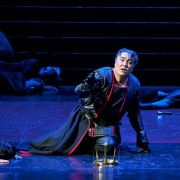
Anna Netrebko brought glamour to the cast as Amelia. She displayed fearsome chest tone, while floating high notes beguilingly, although there wasn't always a lot in between those extremes. “Morrò, ma prima in grazia” was a stonking bit of singing, rapturously received, as was Renato’s “Eri tu che macchiavi quell'anima” which immediately follows it, sung with huge power and a legato to die for by Mongolian baritone Amartuvshin Enkhbat. Dramatically, they were mismatched, she completely immersed in the action, he an expressive void.


Charles Castronovo sang Boston governor, Riccardo. I’ve long admired his vocal longevity, singing lyric tenor roles within his capability, like Alfredo and the Duke of Mantua. Riccardo is a tougher assignment and although he sang with his trademark elegance, the voice hardened under pressure. However, the love duet with Netrebko came off wonderfully well.
Albanian soprano Enkeleda Kamani sang Oscar neatly, teasing and breezy despite the characterisation with which she was saddled. Anna Kissjudit sang a loud Ulrica, but Carles Pachon made an impression as Silvano, who’s in on the tarot scam. Manuel Winckhler and Friedrich Hamel were the bass intriguers Samuel and Tom, seeking Riccardo’s assassination. The Staatsoper Chorus sang with relish, bringing the ball scene to life vividly. An evening best enjoyed with eyes wide shut.