A Broadway musical? At the State Opera? Staging Sweeney Todd: The Demon Barber of Fleet Street would be a bold stroke in any circumstances, but opening the new season with it is particularly audacious. And, as it turns out, not the clever gambit that might signal a new, more adventurous era. Instead, the production never quite settles into being an opera or a musical, combining elements of both in an awkward admixture. And it’s freighted by some of the problems typical of State Opera productions.

Foremost among these is the clutter, too many people and too many extraneous elements that do nothing but detract from the main story and characters. The chief offender is a graphic artist sitting at a table at one end of the stage, drawing quick sketches on an electronic screen. The sketches then appear, greatly magnified, on the walls of the set. They may or may not embellish the action onstage; trying to decipher them quickly becomes tedious and perplexing. But director Martin Čičvák singled out the artist for special recognition during the curtain calls at the premiere, so evidently they hold great meaning for him.


As usual, the single set leaves a lot to the imagination. A rotating pile of blank tilted walls and geometric forms makes for quick and smooth scene changes, but offers zero atmosphere. Outfitting everyone in contemporary street clothing further dulls the setting to anyplace, anytime. Recreating Victorian London is probably beyond the budget of most opera houses, but there’s not even a hint of squalor. Or perhaps it’s all a deliberately bland set-up for the seething bakery basement, which spins up in the second act in threatening shadows and flames, with a roaring furnace and huge grinding wheel ready to turn hapless victims into meat pies.
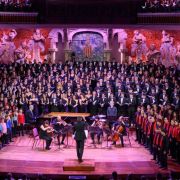
What keeps all this afloat is, first, an almost nonstop series of smart production numbers. A contingent from the National Theater Opera Ballet joins the State Opera Chorus for sharp vocals and snappy choreography that accentuate the narrative and add a Broadway flavor. Choreographer Silvia Beláková’s background as a dancer and her experience working in both operas and musicals show in the group’s fluid movement, witty mime work and kinetic energy.

The singers anchored the premiere performance, which was no small accomplishment. They perform mostly in sterile, claustrophobic spaces, and they are miked – helpful for the long stretches of dialogue, but not kind to voices trained in operatic projection. Adam Plachetka was almost too much as the title character, his serious bass-baritone outstripping the demands of the role. It seemed ludicrous for passionate entreaties to be directed at a straight razor.
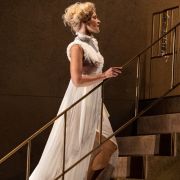
Barbora Perná stole the show in her scenes as Mrs Lovett, with expressive vocals and a breezy acting style perfect for a musical. Michal Bragagnolo was surprisingly strong as Anthony Hope, singing with notable ardor, and Martin Šrejma was delightful in his brief turn as Pirelli, an amusing fop with a pretentious voice. Some performers were no more than a stereotype – Ivo Hrachovec as an overbearing Judge Turpin, Eva Hartová as his fragile ward Johanna – but Jaroslav Březina brought a nice comic touch to the bit part of Beadle Bamford, showing how truly awful amateur singing can be.


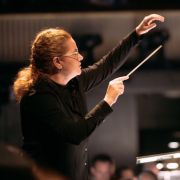
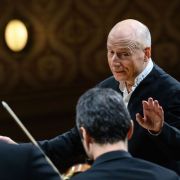
In the pit, Anna Pozidis conducted a performance by the State Opera Orchestra that was a standout mostly for not standing out. This is not a criticism. Much of the music in Sweeney Todd gradually sneaks in and out, setting moods and punctuating the dialogue, and it’s even more effective if that happens almost imperceptibly. Pozidis also showed an expert hand with the spare ostinato effects that add tension and atmosphere throughout. And in those moments when a character suddenly bursts into song, the orchestra was there in full warmth and melody.
As the corpses pile up in the denouement, Čičvák offers a puzzling twist – he brings all the dead back to life, including the now-headless body of Beadle Bamford. They get up and walk around like zombies, slowly disappearing into the darkness of the basement of horrors. Are they on their way to hell? Or is it simply a gruesome add-on, another needless distraction? Like the oil-and-water mix of opera and musical, this final stab at blending tragedy and comedy leaves only one lasting impression: confusion.