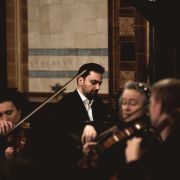
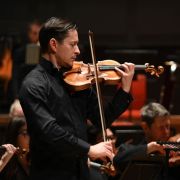
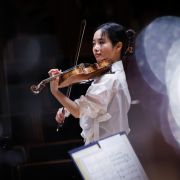
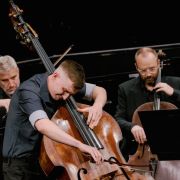
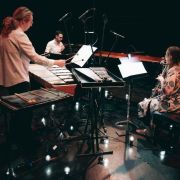
The Fire Station auditorium in Sunderland is a classic shoe box design, the kind favoured by engineers for its clarity. In this BBC Prom, the players of the Royal Northern Sinfonia were aided – just – by the addition of reflective sound panels on either side of the stage, but the sound, at least from my seat, was overly immediate and uncoloured. The orchestra was standing throughout, which undoubtably looks good but is hard work for the heavier instruments. Maria Włoszczowska directed with endless energy and balletic grace, from a position just outside first desk.


The enthusiasm among musicologists for exhuming juvenilia is seemingly unstoppable, usually with the results you would expect. In this case they have unearthed a wonder, the Double Concerto for violin, piano and strings in D minor by the 14-year old Felix Mendelssohn: fresh, lively and, despite youthful excesses and discursions, containing passages of uncommon beauty. This was not only a delight but a serious work of art. Włoszczowska was joined by pianist Christian Ihle Hadland, a player of sensitivity and delicacy, having the skill required to negotiate Mendelssohn’s vast, furiously rapid scales but also the ability – and the desire – to be discreetly responsive as an accompanist. Despite Mendelssohn’s enthusiastic orchestration, the focus was necessarily on the two soloists who sounded at times as though they were engaged in a concert of chamber music which had unexpectedly found itself surrounded by an orchestra.
Graźnya Bacewicz’s Divertimento was billed as a witty nod to 18th-century dance forms, but to my ears sounded anything but. Angry, surging and with more than a hint of the polytonality which was to dominate her later style, this was a thunderous calling card, of more importance than its seven-minute duration would suggest. Włoszczowska moved as a dancer between playing, directing and demonstrating by body shape, controlling the fierce crescendos and diminuendos by leaning vertiginously into and out of the orchestra.


Mozart’s Symphony no. 39 in E flat major was brisk, accurate and to the point. The overall direction was a little heavy-footed, and the Andante con moto second movement was so fast it could almost have doubled as an auxiliary first movement. Although forte and piano passages were well pointed as a whole, I missed a sense of dynamic variety within a line or phrase which could perhaps have brought the music to life a little more. The players of the RNS – a well-drilled and cohesive unit comfortable in its own skin – were flawless in their entries and attack. Special mention must go to the woodwinds who sparkled, caressed and glided through phrases with obvious enjoyment; and to Jude Carlton, whose exemplary timpani playing, never obtrusive, elegantly provided the rhythmic motor throughout the outer movements.