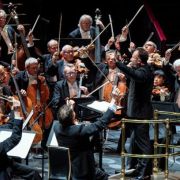
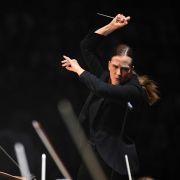
Mahler famously worried that audiences would go home and shoot themselves after hearing Das Lied von der Erde. Well, it certainly packs an existential punch, but its moving yet complex expression of ultimate farewell remains popular, with the BBC Philharmonic Orchestra and their Principal Guest Conductor, Anja Bihlmaier delivering the work’s 21st BBC Proms performance.

They opened with Bushra El-Turk’s brief Mosaic, reflecting on the mosaic of our multiple identities, but also Mahler’s sense of ‘otherness’ found in Chinese poetry. The problem with hearing a short piece, packed with intensity and meaning, is that there’s a lot to make sense of very quickly, and then it’s gone. Virtually inaudible string scratchings quickly developed into intense tremolos, rapid brass rasps, with hints of Byzantine Orthodox chant, and even elements of Mahler’s harmonies. It all built to frenzy, and a climax of hyper string vibrato, before dropping away for a touching lament from a string octet. A striking piece that definitely benefits from repeat listening (thank you, BBC Sounds).


Haydn’s Farewell Symphony, an early example of industrial action, was his message on behalf of musicians keen to get home from a long summer at Prince Nikolaus Esterházy’s palace. Message received, the Prince arranged for their departure the very next day. Bihlmaier’s Allegro had energy, direction and graceful dynamic contrasts. On muted modern instruments, the leisurely Adagio lacked definition, with blurry grace note ensemble, but the Menuetto was perky with greater focus. Their finale set off with quiet intensity, with tight ensemble from scurrying violins. In the farewell coda, the players’ gradual departure was stylishly staged and, following Bihlmaier‘s departure and a cheeky yawn and wave from the viola, the two violinists were left alone to finish.
Mezzo-soprano Jamie Barton, now a Proms regular, was joined by fellow American Clay Hilley, making his Proms debut, the makings of a dream team for the Mahler. Dressed in sparkling red and shimmering silver, they both possessed the size of voice to ride the wave of a huge orchestra, but also the sensitivity and ability to communicate the depth and emotional weight of the text. However, the Royal Albert Hall’s acoustic is unforgiving, and there were moments, when Mahler’s orchestration is at its weightiest, where even they struggled to be heard at the Side Stalls, although from the Arena (and on the radio), the balance was no doubt better.

Hilley’s operatic delivery of the Drinking Song of Earth’s Misery was gripping, full of drunken swagger. Despite initial balance issues, his repeated “Dark is life, dark is death!” rang through with knife-edge precision. Barton followed with autumnal tones, bright at the top of her range, richly golden at the bottom. Hilley returned for the playful Youth, matched by tight orchestral articulation. For Beauty, Barton matched the flutes’ fluttering delicacy with a crystal line, and following the boisterous orchestral “lads on horses”, Bihlmaier brought the orchestra right down, allowing Barton to colour her delivery with sensuous slides, shimmering with golden sunlight.


Hilley was at full strength in The Drunkard in Spring, relishing each verse’s gleaming final notes. But any sense of frivolity was swept away for Der Abschied. No Haydnesque jokes in this farewell, and Barton’s heartfelt expression was matched with beautiful delivery of Mahler’s orchestral word-painting, with nostalgic mandolins, woodwind birdsong, fruity bass clarinet and a jazzy clarinet solo. Barton exuded warmth for “Die liebe Erde” with mandolins again and celesta, before the final tragic “Ewig” (Forever) repetitions brought the evening to a sombre yet peaceful conclusion. Bihlmaier and Barton held the hall in total silence for what felt like an age before a collective relaxation was finally permitted.