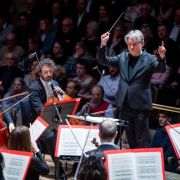
It’s sometimes difficult to know which of your emotions to focus on when you’re watching a group of young musicians as phenomenally talented as those of the National Youth Orchestra of the USA. There’s wide-eyed amazement at the sheer musical accomplishment on display, balanced with disbelief that they can do so much so young, tinged with a pinch of regret that, if only I’d practised harder 40 years ago, maybe I could have been that good!

The NYO-USA showcases some of the most gifted young musicians in the United States. They come together every summer under the auspices of New York City’s Carnegie Hall and their visit to the 2026 Edinburgh International Festival is part of the Edinburgh International Festival’s multi-year collaboration with that venue. They laid out their wares early on in a performance of Samuel Barber’s Overture to The School for Scandal that was as dazzlingly bright as you’d expect from a group of young players, the strings positively surging with vibrato but also finding the space for a gorgeous oboe cantilena, with harp swirls and sparkling triangle offsetting the picture beautifully.


They brought the same dazzle to bear very usefully on Gershwin’s Piano Concerto in F, the sheen on the strings balanced by forthright crash-bang-wallop percussion, so important in this piece. The bluesy trumpet solo in the middle movement got off to a slightly difficult start, but settled into something so relaxed and woozy you’d think it might be the soundtrack to the heatwave. And any orchestral slips could be easily forgiven for the sheer, surging beauty of the strings in the slow movement’s main theme, a beauty they carried over into its appearance in the finale.
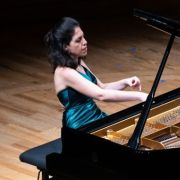
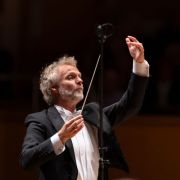
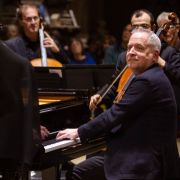
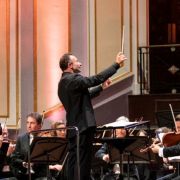
Kirill Gerstein, who knows a thing of two about Gershwin’s jazzy idiom, brought fizzing energy to the piano part. His playing was supercharged in the firecracker finale, but rhapsodic and easy in the slower music. Karina Canellakis knew when and how to relax in her conducting, but she tightened the spring in the finale, before surprising everyone in the ensuing encore by playing the violin next to Gerstein in the slow movement of Ravel’s sonata. It seems that pretty much everybody on stage had boundless talent.

The orchestra then passed every technical challenge in Bartók’s Concerto for Orchestra, one of the toughest tests any orchestra can sit. The spectral basses of the opening, the Gabrieli-ish brass at the height of the first movement, the chortling bassoons in the Presentado le coppie, the storm of strings in the finale: all passed off without anyone seeming so much as to break a sweat. Maybe there was a slight feeling that, while the musicians had all the technical equipment under their fingers, they didn’t quite have the musical insight to make Bartók’s phrases come alive. However, that’s hardly surprising at this stage of their careers, and that will surely come as their careers develop. There were many faces on the Usher Hall stage that I’m sure I’ll see again.