The lights went out when the first act of the new production of Mozart's Die Entführung aus dem Serail was not even an hour old. Perhaps it had been the extraordinary, sad beauty of Jessica Pratt's “Ach ich liebte” that overwhelmed the notoriously sensitive French grid. And then, miraculously, when it was turned back on, her “Martern aller Arten” lit up the sky. Blazing, pure, profoundly expressive and topped by a cadenza that landed like a revelation. The grid held. There are evenings when a single aria justifies the existence of opera as an art form, the Théâtre des Champs-Élysées as a building and Paris as a city. This was one of them.

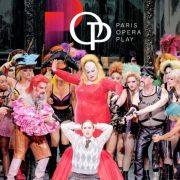
Florent Siaud's cinéma vérité production of Mozart's happiest opera makes no concessions to glamour – or, indeed, to happiness. The cast are not princes and odalisques, they are commoners who live under surveillance of thugs in black who sport earpieces and carry guns. The women are being recruited into a seraglio, or in chemical submission for having done so. This is a world of pre-code morality where, Siaud believes, Mozart's dark themes of coercion, jealousy and power flourish. In an era when young women held against their will – Spanish, English, Dutch, or whatever, as the dialogue makes clear – are no longer a laughing matter, Siaud's decision to let the darkness in looks less like a directorial choice than a moral one.


The cast inhabited this world without vanity. Amitai Pati's Belmonte arrived looking less like a nobleman than a docker from a Jean Gabin film – weathered, watchful, unremarkable – which made the moment his true character surfaced all the more effective, his lyric tenor touching precisely because it never bullied. Manon Lamaison's Blonde worked tirelessly in a series of body-hugging costumes of relentless similarity, finding warmth and genuine feeling where the staging offered little room for either, making an often over-perky cutie into something approaching a real human being. Mozart, like Dickens, can be a little sloppy in these things.

Ante Jerkunica's Osmin, deliberately emptied of comic grotesquerie and certainly anything resembling turquérie, is part of Siaud's scheme; no pantomime villain here, just a functionary, which in context is more unsettling. Uli Kirsch's Selim, slight of frame and presence, built with accumulating frustration to something close to impotent rage, his authority hollowing out even as his voice rose – a portrait of power that believes its own myth until, suddenly, it doesn't. That he has Osmin shot in plain sight, without apology or consequence, gives the pre-code morality its final, chilling punctuation.

And Pratt, who had been building her case since Konstanze’s first aria, accumulating authority with quiet certainty, would find in her duet with Belmonte a tenderness that the staging could do nothing to diminish. By the time the lights failed, the audience was already hers. At the end so was the opera's.


While a sound-effects man at the edge of the stage – bells, glass rims, rumbling thunder – gave the evening a handmade texture entirely in keeping with the aesthetic, like a one-man sound department from the early talkies, Laurence Equilbey and her Insula orchestra drove the score with energy and tight ensemble discipline, the partnership with the stage consistently sure. That the sound seriously lacked bass and the harpsichord remained inaudible throughout may itself have been a statement; a period-instrument orchestra playing it straight, subordinate to the drama like a Mahagonny pit band, all the more impressive for resisting the temptation to remind you of its own virtues, except for an occasional bourgeois Mozartian ornament or improvisation slipped in like a bewigged calling card from another world. It was music as commentary rather than consolation. Mozart, one suspects, would have been surprised.
But as the French well know, not every production needs to be beautiful. Some need to be true. This one, at its best, was both.