The empty space left where someone was, or should be: Verlaine and Beckett are among the creative minds attracted to the challenge of describing this space. So too the Korean writer Han Kang. In The White Book, published in 2016 and translated by Deborah Smith, she meditates on the nature of whiteness in the world around her, inspired by the death of her elder sister as a premature baby. The related challenge for a composer is a paradoxical one: to make sounds that describe silence. Laura Bowler has done so before, writing Antarctica (2019) in response to a voyage around the continent.

Co-commissioned by the LSO, who gave the UK premiere of The White Book in two concerts last week, Bowler has scaled up her ensemble writing from music theatre pieces such as FFF (2017) and Things Are Against Us (2025) without blunting the edge of her sharp ear for a telling effect. In those pieces, Bowler herself has sung the central role, whereas she composed The White Book at the invitation of the soprano (and conductor) Barbara Hannigan. On Thursday night, Hannigan embodied the part, singing from memory and soaring through stratospherically pitched melismas and chasmic falls with the alluring assurance of her finest Lulu performances from a decade and more ago.


The second of The White Book’s five movements has a strong pitch centre, and with it a sense of direction. Elsewhere continuity is more elusive, on a first listening, in gestures which hold the ear over the course of 35 minutes – no small achievement for a new piece – but do not match the variegation of Kang’s verbal imagery. To reach for a visual comparison, the “White Paintings” of Agnes Martin structure their abstraction with the kind of subtle hand (and grid) to guide the eye that would be welcome here. Slow glissandi predominate, until a Bergian-expressionist pile-up of harmony in the final ‘song’ brings relief as well as intensification of angst. An electronic element to the score takes a while to settle down – for the opening minutes, Hannigan’s amplified voice seemed uncannily to emerge from the back of the stage – but eventually produces a hauntingly simple echo of memory to mirror the text.
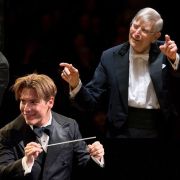
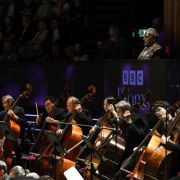
It may be that Bowler had composed with a plan of Hannigan conducting as well as singing, as she has done in older, powerful assertions of female agency in the face of tragedy, such as Poulenc’s La Voix humaine. On the podium, Bar Avni coordinated the London Symphony Orchestra with discreet authority; given her recent and outstanding album (on Alpha) of three-movement symphonies by Stravinsky and others, it would be good to appreciate her talents in a full programme before long.


As it was, after the interval, Hannigan returned to the stage to lead well-defined performances of Ligeti’s Lontano and Richard Strauss’ Also sprach Zarathustra. Perhaps the distance evoked by Ligeti could have been more distant still, and the picaresque detail of Strauss’ Nietzschean exploits more dynamically contoured without such an overriding focus on a supple legato. A measure of vulgar excess is surely priced into Strauss’ orchestral writing, but the LSO reined themselves in and waltzed nimbly through Zarathustra’s dance-song, with leader Benjamin Marquise Gilmore sketching an engagingly wilful portrait of the philosopher king.