This two-course all-Italian musical feast gave charismatic conductor Nil Venditti an opportunity to make her mark on a pair of composers a generation apart: one better known for his stage works, the other for a handful of orchestral scores.

Except for the ‘Roman trilogy’ and La boutique fantasque – works that bought Respighi international success – his orchestral music enjoys rare outings, so it was especially rewarding to hear his Vetrate di chiesa (Church Windows) receiving its Proms premiere. Completed a century ago and scored for large orchestra, three of its Four Symphonic Impressions (the work’s subtitle) are reworkings of earlier piano pieces based on plainchant melodies and inspired by a recent immersion in Gregorian chant.
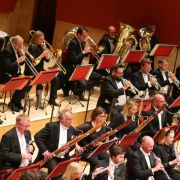
Venditti and the BBC Symphony Orchestra gave a detailed and sweeping account of the cinematic score, the meandering theme and quasi-oriental colouring of The Flight into Egypt perfectly conveying the image of a nocturnal caravan journey through the desert. Its mystery and mystical rapture – bearing reminiscences of Rimsky-Korsakov with whom Respighi had privately studied – was cast aside for the bombast of St Michael the Archangel, a dramatic portrait evoking the aerial combat between St Michael and the dragon in heaven. Venditti let brass and timpani off the leash here, yet there were sublime moments from velvety strings, mellifluous woodwind and a beguiling offstage trumpet that brought respite from the prevailing tumult, Satan’s eviction from heaven signalled by a singular tam-tam stroke.


A return to earlier solemnity beckoned The Matins of St. Clare, though its cloistered atmosphere and delicate sonorities couldn’t quite disguise a diminished inspiration. From its pious intensity there emerged an accumulating grandeur for St Gregory the Great, once described as a kind of ‘Papal Coronation in sound’, which climaxed in Richard Pearce’s excoriating organ entry. Thereafter, a sense of ceremony returned, suitably resplendent for this late-6th-century saint.
There followed a revelatory performance of Rossini’s Stabat Mater where the BBC Symphony Chorus, Epiphoni Consort and four soloists joined the orchestra to showcase the composer’s theatrical instincts. Venditti clearly viewed the work as a precursor of Verdi's Requiem. That Rossini’s 1841 work strays into the world of opera is hardly surprising given his earlier achievements with over 30 stage works in just 19 years. His jaunty tunes, more secular than sacred and with little sense of ‘dolorosa’, surely negates the 13th-century text with its meditation on the sufferings of the Virgin Mary. But Rossini’s synthesis of heartfelt solemnity and theatricality is as sincere as the commitment from the combined forces of this blistering performance.

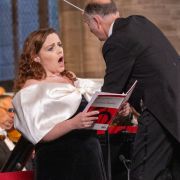
Venditti linked most of its ten movements, sustaining momentum with minimal pauses and adding arresting attaccas. The choral contributions were of the highest standard, with pitch-perfect intonation for the two a cappella passages and thrilling in the closing fugue that was remarkable for its surging energy. No less pulse-raising were the choral pleas for compassion in the hellfire Inflammatus, where soprano Federica Lombardi brought fervent expression as she soared ecstatically over the orchestra, brass and timpani adding plenty of colour.

Replacing the advertised René Barbara, tenor Dave Monaco showed off his impeccable style and technique in Cujus animam. After its stern opening, he began almost tentatively, yet leaving plenty of room for development and rising to the occasion with an unambiguous high D flat at the end. The dark, if somewhat woolly tones of bass Nicola Ulivieri (more a baritone to my mind) were heard to impressive effect in his Pro peccatis, while Chiara Amarù – completing the all-Italian solo team – sang with conviction and flair in her Fac, ut portem Christi mortem, supported by warmly expressive horns and woodwind. If soloists don’t always make ideal ensemble singers, they worked together here magnificently, with the quartet Sancta mater a real joy, not least for the buoyant orchestral support.

But the evening belonged to the BBC Symphony Chorus and Epiphoni Consort who, together, created an unforgettable impression that will be treasured long after the event.