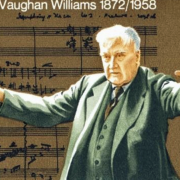


Whenever you hear a Vaughan Williams symphony, you think this one must be the greatest – never more so than with the “Pastoral”. By the ‘greatest’ in the context of VW, I mean striving for universal meaning beyond the notes. Following this line of thought, the least ‘great’ is the diminutive Eighth, and to hear them both side by side demonstrated the merit of this theory.

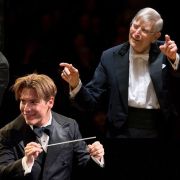
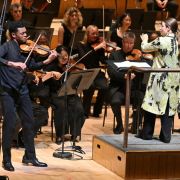
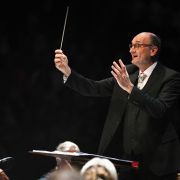
Sir Antonio Pappano and the London Symphony Orchestra, on scintillating form, laid out the delights of the later work with enthusiasm and virtuosity. The structural games of the opening movement were deftly pulled together, with the large string contingent bringing out the depth of sound in the final peroration of the four-note motto theme. The wind and brass Scherzo was fast and sharp, while the beauties of the strings-only slow movement were revealed by a different approach to the norm. Pappano, as a conductor immersed deeply in Italianate operatic drama, found a level of passion in the sweeping lines that was less Tallis Fantasia and more Puccini – a composer beloved by both VW and Sir John Barbarolli, who was the dedicatee of the symphony. Moving swiftly into Turandot for the finale, with the famous ‘phones and spiels’ clattering away, Pappano found fun but also something slightly threatening, to balance things out entertainingly.


However, it was the Pastoral that opened the evening, and in this powerful performance, it was a hard act to follow. After an introduction by the maestro that may have rambled too much, Pappano launched into a cleared eyed reading, putting aside over-expressivity for propulsive tempi that showed us the structural strength of the undulating lines and modal chords. Also, he was able to reveal the harmonic ambition of the work, particularly in the opening movement, never trying to soften the polytonality by homogenising the balancing of the parts.
The slow movement, somewhat spoilt by a screaming child into the audience, was intense and frozen. The natural trumpet solo was played at the back of the orchestra and not made so much of a feature of as in some performances, correct in this context and in the Barbican Hall. The Scherzo was heavier and more funereal than usual, to great effect – emphasising the magic of the light-as-a-feather scuttling’s of the coda – one of the most inspired moments in any VW symphony.
Mary Bevan was the beautiful and rapt soloist in the finale, heralding an atmosphere of human warmth at last. Pappano and the superbly balanced and translucent LSO grasped the passionate mettle of the central section of the movement, and the final climax was arrived at and delivered with full emotional weight. Whether this is a requiem for the dead in WW1 or ‘a cow looking over a gate’ (as it was put by that acid creature Peter Warlock), in this performance you were left in no doubt that it is VWs ‘greatest’ work.