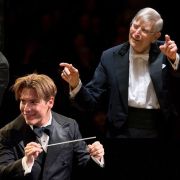
There is a perception that a concert dedicated to one composer alone might be a tad limited – boring even. Happily, that perception was blown into smithereens tonight. The partnership between Sir Simon Rattle and the Orchestra of the Age of Enlightenment illuminated Berlioz's extraordinary orchestral imagination through timbre, clarity of line and period colour. We were brought into a sound world where Berlioz sounded not just Romantic but revolutionary, vivid not lush, more theatrical and less monumental.

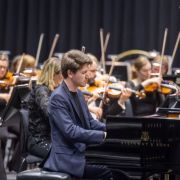
Harold en Italie is less a showpiece concerto than a musical narration, with the viola acting as observer rather than protagonist. This was reflected in the staging of violist Timothy Ridout, who entered several minutes into the work and initially played from a perch between the harps and flutes before gradually moving centre stage. At one point he even turned to face the orchestra. It certainly emphasised Harold's wandering character, though the movement of other string players on and off stage occasionally made the performance feel more like a rehearsal than a fully realised dramatic concept.


Ridout’s tawny mellow sound seemed to breathe the music, at times using no vibrato but slowly allowing it to blossom. The care paid to dynamics both by soloist and orchestra was remarkable, the dialogue between the viola and the harp reduced to the faintest whispering.

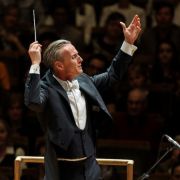
Rattle, with minimal physical gesture, commanded a vast sound world, from the throbbing tread of the Pilgrims' March to the raw energy of the Brigands' Orgy, where the period brass revelled in Berlioz's maniacal chromaticism.
So far so wonderful. Then came the highlight of the evening and one of the finest performances I have heard this year: Symphonie Fantastique. This performance had everything: searing dynamics contrasts, revelatory clarity of texture and lively tempi that allowed the music to flow particularly in the expansive third movement.
Rattle shaped the idée fixe in the opening Reveries et Passions with the delightful combination of hesitant rubato and precipitous forward momentum, the repeated quavers sounding like the pounding of the heartbeat of romantic passion. Rattle took the tempo for the waltz on the swift side with cleverly varied rubato. The trumpet contrapuntal line toward the end was given a prominence I had never heard before, making it a startling discovery.
The dialogue between the cor anglais and the offstage oboe in the third movement produced a fine effect of call and response over distance, though at times when they played together the cor anglais dominated all too easily. The dynamics of the thunder were wonderfully controlled at the end.


The sextuplet drum beat which opens March to the Scaffold was punchy, answered by ominous brass. It’s not frequent that the Ophicleide makes an appearance, but its highly distinctive deep throaty rasp adds hugely to the character of the piece. Again, most remarkable was the extension of the crescendo and of the note values on the clarinet of the idée fixe before the guillotine descends, a yearning just before death strikes.
Rattle conjured up a grotesque sound world in the final movement Witches Sabbath with ghoulish muttering on strings, octave slides on the piccolo that were deliberately played slightly out of tune, and a clarinet that squawked and cackled its way through the transformed idée fixe. The church bells had wonderfully graded dynamics, the echo effect being particularly effective. Rattle whipped the OAE into a fugal frenzy, bringing the concert to a sensational close.