There was a lot riding on this new Scottish Opera Turandot. A major co-production with Irish National Opera, it is directed by Sir David McVicar, following his outstanding Il trittico here in 2023. It is also the first time that Franco Alfano’s original, uncut completion of Act 3 has been professionally staged in the UK. Therefore, I approached the show with great expectations… but hardly expected to see Miss Havisham herself on stage!

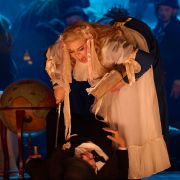
McVicar sets the action in the 1920s, at the time of composition (Puccini died in 1924, the opera premiered posthumously in 1926). There’s a sense of both decadence and decay in Charles Edwards’ set, which is a dilapidated Art Deco music hall. An eternal wedding banquet is strewn with cobwebs as Turandot, in a bridal gown and veil trimmed with rotting lace, waits for a bridegroom who never appears – shades of Charles Dickens – accompanied by a white-haired, mini-me princess.


The Mandarin is a Ringmaster emcee, complete with microphone stand, while the trio of Ping, Pang and Pong are a Chaplinesque music hall act. Josef Jeongmeen Ahn, Aled Hall and Luvo Maranti play it for laughs, slickly choreographed, although turning their “Ho una casa nell'Honan” into a giggly opium pipe dream misses the trio’s poignancy, a rare misstep in McVicar’s otherwise excellent direction.

The executioner strips the doomed Prince of Persia, who stands starkers before Turandot – decked out as an Ice Queen of the Night before a replica of Karl Friedrich Schinkel’s famous Magic Flute starfield – before facing the chop.
In Act 2, Jamie MacDougall’s decrepit Emperor Altoum, wraith-like in a long cloak, blood dripping from his mouth, emerges from the bowels of the stage. It is wonderful to hear the role sung with full tenor voice, rather than a feeble ‘old man’ depiction. Turandot then arrives to pose the three riddles, uncovering the coffin of her ancestor Princess Lo-u-Ling, whose wizened head is visible through the lid.

The stage within a stage shunts forward for Act 3, bare but for a giant crescent moon. It’s here that the big Turandot–Calaf duet plays out, longer here than usual. Puccini died before he could complete the opera. When it premiered 100 years ago at La Scala, the conductor Arturo Toscanini laid down his baton after the death of Liù, the last music Puccini composed. Subsequent performances closed the opera with an ending by Alfano – but a shortened version, with cuts imposed by Toscanini. That abbreviated version became the standard performing edition, but McVicar’s staging – like Claus Guth’s in Vienna – returns to Alfano One, as it is known.

The extra hundred or so bars throw a massive vocal challenge to the soprano and tenor, but they make Turandot’s ‘thaw’ much more credible, rather than just melting when Calaf imposes his kiss upon her. McVicar considerably helps that thaw further: she comforts the grieving Timur after Liù’s death and leads him to her funeral cortège; and it is Turandot who initiates that famous kiss – cue the exit of her mini-me – making the conclusion more dramatically plausible. When the back wall opens up during the final chorus, allowing natural light to flood the stage, Altoum and his courtiers wither and die, as if a spell has been broken.


The leading couple – Danish soprano Trine Møller and American tenor Victor Starsky – still had enough left in the tank to cope remarkably well with that punishing duet. Møller didn’t begin “In questa reggia” with laser attack, making the big notes seem more powerful when they arrived. In her Act 3 Norma Desmond costume, she presented a softer, more human princess than usual, her singing similarly sympathetic. Starsky’s tenor is quite grainy, but there’s power there too – the climax to “Nessun dorma” was impressive – and he lasted the distance well.
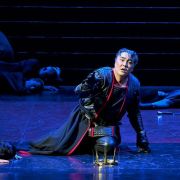
Hye-Youn Lee – a Scottish Opera favourite – sang a touching Liù, her “Tu che di gel sei cinta” before stabbing herself with Calaf’s dagger beautifully phrased. Insung Sim’s sturdy bass suited Timur. The ghostly chorus of wedding guests sang superbly, a credit to the company, and were well directed.

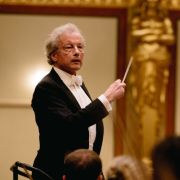
Stuart Stratford conducted a fine account, the Orchestra of Scottish Opera really digging into the lurid score. Tinny speakers piping in the faultless off-stage players did them few favours – the brass occasionally sounded like kazoos – but that’s one of the few caveats in an otherwise splendid performance. Great expectations largely met.