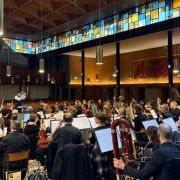
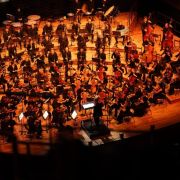
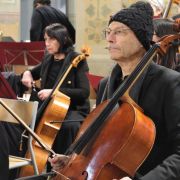
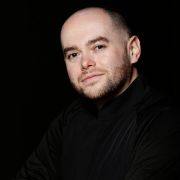
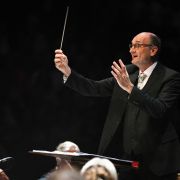
The beautiful setting of Southwark Cathedral elevated the atmosphere of this moving memorial to the thousands who died on 9/11 and the wars that are still being waged since that day 25 years ago. The Outcry Ensemble and its conductor James Henshaw are becoming known for their individual approach to programming and this concert proved no exception.

As an opener, Charles Ives’ The Unanswered Question provided five minutes of mysterious reflection capturing the disconnected nature of grief. Echoing particularly well in the cavernous spaces of the cathedral, with disembodied flutes and trumpet, ignoring the calm movement of the strings. A masterstroke followed with John Cage’s unanswered question on the nature of art and everything, 4’33” , the ‘silence’ giving everyone the enforced opportunity to reflect, with the sounds of the city still around them. Out of this intensity emerged a familiar work of mourning for Americans, the Adagio for Strings by Samuel Barber, firmly establishing a potent sense of sorrow.


Barber’s beautiful setting of James Agee’s Sure on this Shining Night introduced the first choral contribution of the evening, and the section ended with a burst of positive energy by way of Jessie Montgomery’s Starburst, which gave Outcry’s strings the opportunity to demonstrate their worth.`
Tarik O’Regan’s Triptych is a work of immediacy and clear-headed purpose. The composer has the ability to write thematically strong and accessible material without compromising and veering into sentimentality. The excellent massed choirs, filling every space on the stage, revelled in the gratefully written choral writing. Particularly moving was second section As We remember them, with a solo soprano voice ushering in a stream of gentle emotional reflection.
The main musical challenge for all the performers, also comprising Pegasus Choir, English Voices, the choirs of St Catherine's College Cambridge and the American School London, was John Adams’ gut-wrenching work commissioned to mark the first anniversary of 9/11, On the Transmigration of Souls, one of the rawest expressions of grief in any art form. As so often with Adams, he finds a way to be both potent in his message and accessible in his expression. Combining pre-recorded voices speaking words used during the trauma of the attack, and a large orchestra and chorus, the work starts with a long passage of shocked awe, quoting the trumpet call from The Unanswered Question, which gradually moves into a sense of anger and huge violence before retreating again into shocked silence.


Henshaw marshalled his forces admirably, the choral forces coming together to produce both expressions of grief and outright horror. The greatly expanded Outcry lived up to their name with a committed performance of the virtuosic orchestral part.
This was a concert that was truly memorable not just because of its excellent music-making, but also the thought that had obviously gone into its planning; a fitting memorial for those who died and those who were left grieving.