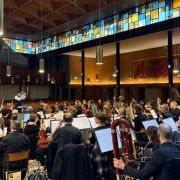
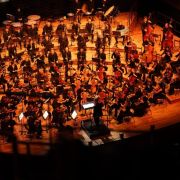
In 1765, Gregor Joseph Werner complained to Prince Nicolaus Esterházy about the “slothful idleness” of Joseph Haydn and the court musicians. Haydn’s response was practical. He and his copyist began compiling the Entwurf-Katalog, effectively producing the receipts for just how much music he had written. Haydn2032’s Il dolce far niente program takes that complaint – and Haydn’s industrious answer to it – as an organizing thought. Nestled between three Haydn symphonies, Werner and Rossini were also recruited to imagine what “doing nothing” in music might sound like.

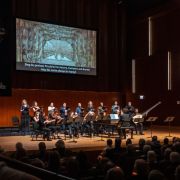
Haydn’s Symphony no. 21 in A major instantly established the character of the performance. Giovanni Antonini favored killer tempi and driving energy, but speed never came at the expense of shape. Even the opening Adagio felt athletic, with enough motion in the line that the slower music never fell slack. When the Presto arrived, Il Giardino Armonico sounded fully settled into Antonini’s demanding pace rather than unduly challenged by it.


Across the evening, the performance became something close to a course in tempi and texture. The accumulated effect was almost physiological: once the ear had adjusted to the most relentless passages, a jog could begin to feel like a stroll. Every relaxation in pace was informed by the more rigorous passages surrounding it.
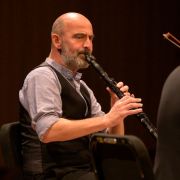
Werner’s D minor Fugue provided the program’s direct encounter with Haydn’s disgruntled predecessor before the Symphony no. 51 in B flat major returned the focus to Haydn. The natural horns were among the particular pleasures of the performance. Bright and majestic, they filled the Don Bosco fabulously without becoming abrasive. Haydn sends the pair toward opposite extremes of their ranges; in the Adagio, the first horn climbs perilously high before the second answers from exceptionally low in its register. Handled successfully, it was impressive, but still stressful to hear, like being carried to the precipice of an auditory cliff. Not a task for the slothful.
No. 51 also supplied one of the evening’s most distinctive changes of weight. In the Minuet, a short bass figure returns at different pitch levels, creating a low, rolling quality that stood out so sharply against the program’s prevailing forward motion. While the effect broadened the sound, adding a texture reminiscent of churning currents, it certainly did not slow anything down.


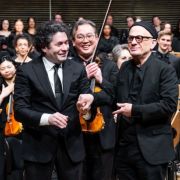
After intermission, Rossini’s String Sonata no. 1 in G major changed the scale of the program without relaxing its energy. Written for two violins, cello and double bass, it brought a leaner ensemble into the same atmosphere of speed and concentration before the return to Haydn, closing the evening with the C major “Symphony for Spain.“ A work clearly assembled from music he had already written for other purposes, it was as much of a delight as it was a teasing inclusion within the program’s theme. Antonini’s relentlessly energetic approach never prevented the music from sounding full-bodied and somewhat luxurious. For the encore, Antonini and his players repeated the finale of No. 51.
While Werner’s complaint might have had some evidence to cling to, however specious or sparse, it’s clear that even when Haydn took shortcuts in his compositions, the route remained perfectly scenic.