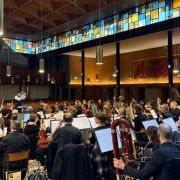
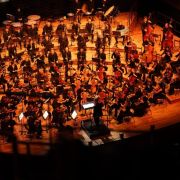
Festa Summer Muza Kawasaki, held every summer at the Muza Kawasaki Symphony Hall, is the closest thing greater Tokyo has to the BBC Proms. Admittedly smaller in scale – 18 concerts over 18 days – it is predominantly a celebration of orchestral music, featuring ten orchestras from Tokyo and beyond. It’s now firmly established as a summer cultural event and it was wonderful to see a sold-out crowd for the opening concert by the hall’s resident Tokyo Symphony Orchestra despite the scorching heat of 35°C outside. As is customary, the programme was preceded by a celebratory performance of the Fanfare for City of Music by the outstanding brass section.

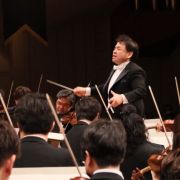
At the helm of the Tokyo Symphony Orchestra was Lorenzo Viotti, who has just begun his tenure as Music Director in April, succeeding the long-serving Jonathan Nott. Judging by this performance, the orchestra and conductor are still very much in the honeymoon phase of their relationship, and their joyful chemistry was clear. Viotti chose an alluring programme of Debussy and Rimsky-Korsakov which showcased the soloistic and virtuosic side of his musicians.


Debussy’s Prélude à l’apres-midi d’un faune was the perfect opener. Viotti painted the sensuousness and languor of this piece with fine, nuanced brushstrokes to mesmerise the audience. The opening flute solo, performed with composure and elegance by principal Kakeru Chiku, was joined by the equally superb solo horn and solo clarinet. Viotti judged the ebb and flow of the work beautifully and brought before us the shimmering sunlight of a summer afternoon. In particular, he produced a silky, lush sound from the string section, the unison violins especially radiant. The crystal-clear crotales near the end reminded one of Japanese glass wind chimes used during hot summer days.
Rimsky-Korsakov’s Capriccio espagnol formed the centrepiece. According to the programme, it’s a work Viotti is very fond of and he chose it because “it’s sure to bring a smile to the audience from the first bar”. Indeed, it was a lively and upbeat performance with brilliantly executed solos by the various principals including clarinet, cor anglais and cello. Viotti gave relative freedom to these players but elsewhere his phrasing was detailed and full of dynamic contrasts, from whispering strings to full tutti. His pacing of the five movements was particularly effective and here too, as in the Debussy, he was successful in bringing out the heat and languor of the slower movements. He took the final fandango at a pretty fast pace, with the rhythms of the castanets and tambourine adding to the Spanish flavour.
The second half comprised Rimsky-Korsakov’s Scheherazade. Listening to this symphonic suite directly after his Capriccio espagnol (composed a year earlier), one noticed that there are in fact similarities in his depictions of musical pictures of exotic lands in both works, although the settings are different: Spain and the Orient. On the other hand, what sets Scheherazade apart from the Capriccio espagnol is its drama and narrative: each of its movements based on stories from The Arabian Nights.


Viotti’s interpretation was elegant and detailed, bringing out colours and textures with clarity and rich sonority. Leader Nikitingleb Ogawa portrayed the title character with sensitivity, if slightly lacking in sensuality. Overall, though, the performance felt a little too slick, too refined. One wanted more robustness and the power in the storytelling. It felt like a trip on a modern luxury cruise ship rather than Sinbad’s voyage of the Seven Seas. Still, there was plenty of charm and individual virtuosity, plus the sense of unity between Viotti and the musicians to savour.