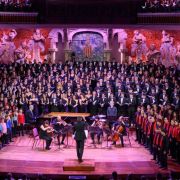
There is a good reason why the works of the First Viennese School are often the very first symphonic pieces music lovers encounter. They possess an instant appeal, even if the deeper historical contexts driving them might not be noticed at first glance. This programme by the Mahler Chamber Orchestra under Daniel Harding offered a thoughtful revisit behind those familiar works on the instrumental revolution: demonstrating how Anton Weidinger’s keyed trumpet altered the expressive boundaries of the instrument.

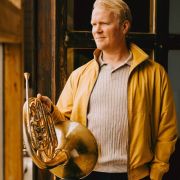
Beyond the organological concerns, everyone was expecting Håkan Hardenberger. In Haydn’s Trumpet Concerto in E flat major, the first movement’s opening theme bears a striking resemblance to the Haydn symphony’s Romance. Aside from one or two minor cracks, Hardenberger’s breath control was flawless. His trumpet tone was warm, flexible and perfectly centred, sounding remarkably like a sun-drenched operatic tenor from the Mediterranean. Every cadenza felt effortless and more like a sweeping operatic aria. The MCO provided an incredibly relaxed and vocal accompaniment, making the audience entirely forget the occasional calculated mannerisms of the opening Haydn symphony.


In comparison with Haydn’s concise but dramatic writing, Johann Nepomuk Hummel’s Trumpet Concerto in E major shifted the tone toward a more expansive, highly predictable Viennese Classical framework. While this stately showcase piece might not deeply challenge a soloist of Hardenberger’s immense experience, he and the MCO delivered it with razor-sharp execution. The second movement was a particular highlight; in atmosphere, orchestration and pulsing accompaniment, it unmistakably resembles the famous slow movement of Mozart’s Piano Concerto no. 21, allowing the lyrical trumpet line to float serenely above the orchestra. The finale plunged into a dizzying display of technical pyrotechnics, which Hardenberger dispatched with effortless nonchalance. He chose Mark-Anthony Turnage’s Nocturne for Trumpet and Strings as encore – clearly a personal favourite – against an extended, shimmering orchestral canvas, the trumpet delivered a slow, jazz-inflected improvisatory chant that went straight to the audience’s heart.

In the evening’s opening piece, Haydn’s Symphony no. 85 in B flat major, “La Reine”, Harding’s specific acoustic philosophy became immediately clear. He paid a near-phenomenological attention to the physical inception of sound, the exact moment a note begins. In the first movement, every key thematic phrase was deliberately highlighted through prominent upbeat figures and apparent rests between sentences. However, paired with a somewhat sluggish tempo, this meticulous shaping felt over-calculated, sacrificing the music's natural flow. The subsequent movements fared much better: the Romance flowed with natural fluidity, offering the orchestra rare moments of free expression during the stormy minor key variations. The Minuet used bold articulation to emphasise the dance rhythms, punctuated by delightful string portamentos, leading into a spirited, seamlessly executed Finale.


Beethoven’s Fourth Symphony was a truly breathtaking performance. Here, Harding’s particular focus on sound production paid off magnificently. The first movement’s transition from a suspenseful introduction to the explosive main theme was stunning. From that point on, Harding managed the orchestra's energy with excellent pacing, keeping the audience utterly gripped. The slow movement flowed beautifully over its pulsating accompaniment figure, highlighting vivid contrasts in the episodic sections. In the third movement, Harding masterfully drove the tempo through the lower strings, injecting a rustic vitality that carried directly into the Finale, which charged toward a high-energy and absolutely perfect landing.