How important is The Drover’s Wife as an opera? For the work, which is a collaboration between co-librettists Leah Purcell and composer George Palmer, has emerged from an important play by Purcell, who then produced an over-written novel and a grimly beautiful film with a terrible ending. I’ve experienced them all, but the significance of the opera is that it develops traditional Dreaming elements from Aboriginal mythology into a serious aspect that will now be shared with opera-going audiences.

Its origins lie in author Henry Lawson’s 1896 short story about a drover’s wife, managing on her own on the bleak Monaro High Plains of New South Wales while her man is away for months droving cattle or sheep. She and a dog tackle a lethal snake and see off a lying Aboriginal man. Read the story as a child, Purcell, a Goa-Gunggari-Wakka Wakka and Anglo-Irish performer and writer, was determined to tackle its inherent racism by giving the wife a name and an identity as Ngambri – the local Aboriginal tribe – gained from a mother who had died in childbirth.


Not that Molly Johnson wanted to be Aboriginal at a time in Australia when the N-word, the C-word and epithets such ‘Jacky’ or ‘Boy’ were the norm for settlers referring to our First Nations. But, guided by a no-longer lying Aboriginal man, Yadaka, who gains Molly’s trust by saving her from rape by a passing colonial and goes deep with her teenage son, Danny, she comes to accept her complete self.
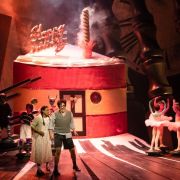
All that racism survives in an opera which questions the standard of ‘the decent man’. Is it the settlers’ misogynist and racist version; or is it the downtrodden but honourable Yadaka, passing wisdom on to Danny? Fortunately, the audience is ahead of Molly via Indigenous spirit figures dancing in supportive corroboree on a set by Isabel Hudson that evokes the Monaro imaginatively, and the ghosts of her Ma and Da reassuring her of a love that broke social boundaries.

Does this all work sufficiently to turn a deeply Australian story into a universal experience? Certainly, Purcell’s coming together with the unlikely composer George Palmer was a good start. Palmer had spent his life in the law resisting his musicality, but retired early as a judge in order to begin to tell Aussie stories through music. His first opera, Cloudstreet, won him 5 stars on Bachtrack, although hasn’t progressed beyond Adelaide.
Palmer is no Verdi. Wisely resisting Aboriginal musical borrowings, he does owe something to Wagner by augmenting emotion and meaning in conversations via familiar musical sounds. The bleak landscape features too and the cataclysmic outpouring for Molly’s reluctant acceptance of Aboriginality seared the spirit. A soulful cello solo moved too as she crawled away from tragedy. Repeated reference to her father singing the Celtic folksong Black is the Colour of my True Love’s Hair both gave Molly her Anglo-Irish part and hinted at her mother’s origins.


Two Indigenous leads carried the main parts – the Royal Academy-trained Nina Korbe (coincidentally Purcell’s niece) gave operatic heft to the conflicted role of Molly. Music theatre regular Marcus Corowa was a heartfelt Yadaka, abused by white strangers but staunch in his dealings with Danny. A third Queenslander, young Nick Smith, gave Danny all the promise of a future that Purcell as writer and director wanted.
Queensland’s done good too. The Drover’s Wife was co-commissioned with Opera Australia to be part of the opening season for The Glasshouse Theatre, a second venue for major productions at the Queensland Performing Arts Centre. The opera moves to Sydney in August.