The recent extension of Christian Thielemann’s and Elisabeth Sobotka’s contracts at the Staatsoper in Berlin – his as Music Director, hers as Intendant – has been greeted as a rare bit of good news in the capital’s cultural landscape. And central to the conductor’s work at the theatre is of course his relationship with the Staatskapelle – a love affair, by all accounts, now set to continue until at least 2034.

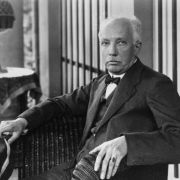
The music of Richard Strauss, arguably Thielemann’s most famous predecessor in the role, is no less central to his work, and recent concerts with the Staatskapelle have seen him making his way through all the composer’s orchestral songs. For this programme, it was the turn of the most celebrated set of all – the Four Last Songs – coupled with the composer’s last tone-poem, Eine Alpensinfonie.


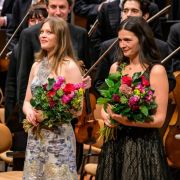
For the songs, Thielemann had procured the services of soprano Diana Damrau, suitably starry casting, perhaps, but certainly not a singer in the gleaming lyric tradition we’re used to. She began assertively, though, digging into her chest voice for the low-lying opening phrase of “Im Frühling”, and rose to the higher passages securely. Her characteristically intelligent way with the text was rewarding.
But there was no hiding the fact that the long, soaring phrasing that are so important in these songs eluded her, the voice only rarely spreading its wings high up, and failing to project sufficiently in the middle range. There was superb work from the orchestra (special mention for the solos of concertmaster Wolfram Brandl and guest principal horn Tristan Hertweck), ebbing and flowing exquisitely under Thielemann’s direction, but one couldn’t avoid a certain sense of disappointment.
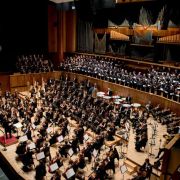
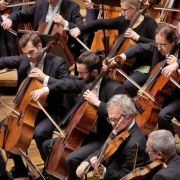
No disappointment, though, when a super-sized Staatskapelle returned after the interval for the Alpensinfonie. Here the orchestra’s willingness to follow Thielemann – no need for a score to help find his way through this treacherous work – up the mountain and deep into the human soul was in evidence throughout. The Staatskapelle’s sound was a marvel, from the veiled, shadowy opening dissonances, via Strauss’s glittering pictorial effects and grand climaxes, through to the warm glow of the final sunset disappearing into dusk.
What was most impressive of all, though, was the conductor’s control of a work whose balance of surface effect and philosophical seriousness, of narrative episodes and symphonic arc, is so difficult to strike. Thielemann never lost his way despite a remarkably flexible approach to tempo, in which seemingly spontaneous adjustments – a bit of extra time to take in the view here, a burst of energy to pick up the momentum there – were incorporated without undermining the general flow.


He was also careful to offer the necessary dynamic contrast in a work that can too often turn into a mere showpiece. The moments of doubt and danger either side of the summit were instilled with an uncanny, almost spectral atmosphere. This was set off against the brassy grandeur of the summit itself and the drama of the storm, which led into a sunset whose intense, impassioned warmth seemed to raise the temperature in the Philharmonie a degree or two.
The Staatskapelle’s playing was superb throughout, despite a couple of minor mishaps and the fact that the winds, in particular, can’t quite match their Berliner Philharmoniker counterparts in long phrases of the penultimate “Ausklang” section. Overall, though, this was an Alpensinfonie to treasure, and a performance to underline quite how special this conductor-orchestra relationship is.