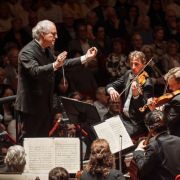
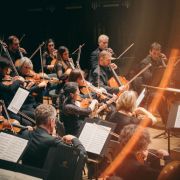
Some concerts entertain while others challenge. But only a small number ever touch the heart so deeply that their very memory is the stuff of legend. Wednesday’s concert given by the Royal Concertgebouw Orchestra under Jaap van Zweden, and especially their performance of Respighi’s Pines of Rome, will be remembered for years to come. Van Zweden, who started his professional career, aged just 19, as the orchestra’s leader before taking to the podium in 1997, returned to Amsterdam. After a turbulent year when some uncomfortable questions have been posed, this Dutch wanderer returned to his roots, choosing to let the music do the talking. How lucky we were to witness such a meeting of minds.


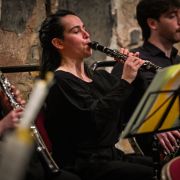
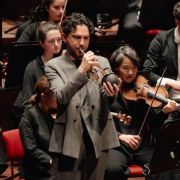
Joyful explosions of colour burst forth in Respighi’s evocative depiction of pine trees found in various Roman settings. Van Zweden’s precise direction navigated a very Italian pandemonium, pitting restraint and ominous candour against riotous cacophony. Like an eagle soaring high in the sky, heaven’s gates opened to reveal Miro Petkov’s sweet off-stage trumpet lament. Leaving little time to dwell, Respighi, the consummate travel guide, swept this faithful traveller onward, the tam-tam’s pulsing vibrations grounding the strings’ cavernous murmurs. Who though, could resist the clarinet’s gentle caress? This Dutch wanderer was having fun. Time in the rehearsal room, creating layer upon layer of magical effects, had been well spent. Even the recorded nightingale’s twitters blended beautifully. Obeying the cor anglais’ snake-like charms, six off-stage brass and the Concertgebouw organ joined the fray. Respighi’s Roman soldiers marched purposefully along the Appian Way, the ground trembling as van Zweden unleashed the full might of the RCO brass.
The Prelude und Liebestod from Wagner’s Tristan und Isolde similarly left its mark, uttering the tenderest of loves capable of melting even the coldest heart. Underpinning it all was the most fabulous double bass section to grace the Concertgebouw stage. Each note with a different story to tell; every ebb and flow, a warm embrace. Stealing the show, the bass clarinet inviting all in their turn to follow love’s true gaze and for truth to flow forth. Understated restraint was very much the order of the day.


Opening the evening, a commission by young Latvian composer Annija Anna Zarina entitled Bloom, whose incessant trills conjured images of an audacious mosquito casting its deadly spell. Korngold’s sumptuous Violin Concerto in D major came as a welcome relief in the experienced hands of Leonidas Kavakos, joining the RCO for an amazing 55th time. His open and expansive sound offered a surprising informality. Jazzy slides and lush romanticism full of Hollywood glamour partnered beautifully with Laurens Woudenberg’s horn solos. If Scarlett O’Hara had descended those red-carpeted stairs, no-one would have blinked an eye. Passionate strains in the Romance touched a nerve and gave time for quiet solace. Even if waters may have muddied a little on high, beauty triumphed in the end. However, it was in the finale where Kavakos’ years of experience performing in this hall came to the fore. Every note was crystal clear as the RCO, turning this way and that, tried to unseat Korngold’s hero from his rodeo ride. Jubilant horns to conclude were every bit the American dream.