Jakop Ahlbom’s debut production for Dutch National Opera of Shostakovich’s neglected operetta Moscow, Cheryommushki (Cherry Town) in collaboration with ISH Dance Collective is quite simply, a great piece of theatre. Premiered in 1959, six years after the death of Stalin, Shostakovich’s work has largely lain dormant ever since, in no small part due to the composer’s professed shame at creating such a “boring, uninspired, stupid” work. Only infrequent performances of the much shorter orchestral suite, a film adaptation (1963), and a studio recording have kept it alive.

In Ahlbom’s new vision of a ‘modern-day fairy tale’, changes abound. Shostakovich’s three-hour original is cut in half, largely by abandoning nearly all of the original dialogue and instead telling the story exclusively through song, film and dance. The result is almost the logical conclusion of Jean-Baptiste Lully’s original French Baroque opera ideal, that of blending music and splendid scenic effects together with choreographed dance. In Lully’s case, he used ballet. Nearly four centuries later Ahlbom, working with choreographer Marco Gerris, chooses hip-hop.


But it doesn’t stop there. Ahlbom’s love of mime and special effects mixed with Gerris’ urban street dance style not only makes this production unique, but a most natural consequence. In a score oft derided for its repetitive, mechanical nature, ISH dancers’ body popping, breakdancing and a host of other styles seamlessly add to the musical flow. Cheeky and clever choreography enhance and articulate many of the subtleties and innuendos in David Pountney’s revised 1994 English translation, sometimes taking satire to a whole new level, perfectly fitting with DNO’s brief to produce a family-friendly show. Five ovations later, it was clear the young and very diverse audience loved the result.

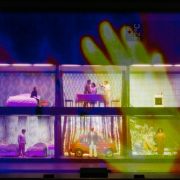
Incorporating dance and updates to the text are not the only changes. Shifting the original set from 1950s Communist Russia to a rather more swish, minimalist 1990s-ish apartment block, recognisable by its two huge luminous baby pink Cherry Town signs, gives a more contemporary vibe. Hopeful tenants, donning a riot of colours, travel across town in a huge Mercedes in search of the flat of their dreams (after their dilapidated apartment was demolished) only to find corruption and sleaze at every turn. Costume designer Esmée Thomassen’s kitsch costumes peppered with wanton high heels, bright green, orange and yellow crocs, and baby pink faux sailors’ uniforms – more familiar to 1990s productions of Stephen Sondheim musicals – ensure humour at every point.

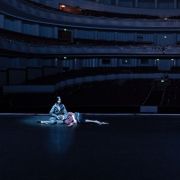
Anouk Steenbakkers’ video visuals depicting an army of shadowy JCBs traversing the stage set the opening scene as dancers clad in black and carrying vintage spades evoke thoughts of Dick van Dyke’s famous “Step in Time” chimneysweep sequence in Mary Poppins. However, perhaps the most surprising addition to Ahlbo’s storytelling armoury are various booming electro-techno-bhangra-hip-hop inspired tracks full of hooting horns, street noise and bicycle bells used for the occasional scene change – the polar opposite of orchestral waltzes and polkas, but hugely effective purveyors of mood.


Barely a moment passes without something to make you smile. Thomas Oliemans as the corrupt and snivelling Fayke Noos was virtually unrecognisable in his ever-so-slightly balding wig and long, lank greying hair as he variously crawled on all fours across the stage, with lips pursed, singing “My honey! My bunny!” His calculating mistress Madison Horman (Vava) exuded similar levels of callousness, frolicking first with their chauffeur before strutting off with Cherry Town’s nefarious manager, the equally manipulative Blatherbox played by Martin Mkhize.
Alexander de Jong as Sasha and Nina van Essen as his wife Masha were the height of domestic bliss, but the night surely belonged to the fearless and incredibly nimble Michael Wilmering as Boris the chauffeur, whose comic moments of ‘hanky panky’ and hilarious chase scene antics were duly rewarded when truth momentarily trumps evil. The apple of his eye Ella Taylor as Lidion similarly stole the show bringing unexpected moments of sincerity when contemplating the true nature of happiness.

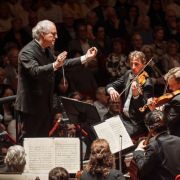
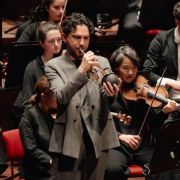
The immaculate Netherlands Philharmonic were on fine form. Rampant trombones, a fabulously taut snare and principal horn Mees Vos’ exquisite solo stopped me in my tracks. Could music director Bassem Akiki perhaps have drawn a rawer Russian fire, or teased a touch more dynamic variation from the score? Possibly yes, but the succession of antics and even the odd magic trick on stage with characters climbing walls, dancers appearing feet first out of the kitchen sink, others bursting through bedroom walls, the whole cast pursing sometimes doomed amorous advances, life-sized dogs with flashing feet being dragged across stage, and disappearing acts behind a curtained lamp shade, more than made up for any preconceived worries. Dutch National Opera’s Cherry Town is a riot of fun!