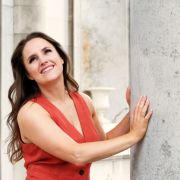
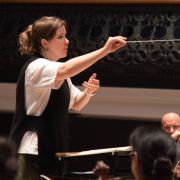
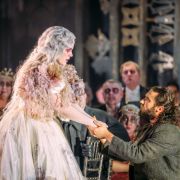
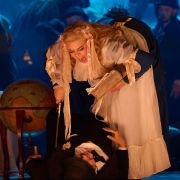
Doing a spot of opera maths, Mozart plus mezzos often equals trouser roles. French mezzo Marianne Crebassa first shot to fame a decade ago on an album stuffed with such roles, suitably titled ‘Oh, Boy!’ and she reprised three of them – restless teenager Cherubino, exiled senator Cecilio and young patrician Sesto, with the addition of Cretan prince Idamante – in this exquisite debut appearance with The Mozartists and their conductor Ian Page at Wigmore Hall.

Crebassa’s pliable mezzo, with a warm vibrato flutter, still has soprano-like ease at the top but her dusky chest notes have grown noticeably riper. Opening with “Il tenero memento” from Lucio Silla, she steered through the treacherous coloratura with unflappable composure and even emission as Cecilio quivers with joy at the prospect of being reunited with his wife. In “Ah se a morir mi chiama” (from Act 2), Cecilio bids his wife a pained farewell, Crebassa swelling dramatically to colour notes.


The hesitations in the tempestuous “Il padre adorato” (from Idomeneo) perfectly captured Idamante’s conflicting feelings of joy at the return of his father and the despair at his apparent rejection. “Voi che sapete” saw Crebassa move away from her music stand and adopt teenage boy awkwardness in Cherubino’s famous aria, the page boy’s nervous palpitations depicted by the Mozartists’ light pizzicato strings.
But the plum Mozart trouser role – perhaps better called a ‘toga role’ – is undoubtedly Sesto in La clemenza di Tito who gets two showstopping arias. In the emotionally charged rondo “Deh, per questo istante solo”, Sesto stoically accepts his fate; Crebassa’s flexible instrument negotiating the rapid vocal line with ease. Even finer was the virtuosic scena “Parto, parto, ma tu, ben mio” from the end of Act 1, where Sesto submits to the demands of his scheming beloved, Vitellia, that he murder the Emperor Tito. After the plangent opening, Crebassa was at her urgent declamatory best in the second section, her florid coloratura matched step for step by the fruity basset clarinet obbligato of Emily Worthington. There are few mezzos to rival Crebassa in this repertoire. It’s a criminal act of neglect that she’s never been engaged at Covent Garden.


Joseph Haydn should be too brilliant a symphonist for him to be relegated to orchestral ‘filler’, yet that’s pretty much how it felt here, with a symphony in each half to separate Crebassa’s two appearances. The Symphony no. 34 in D minor suffered from anemic strings and a soporific opening Adagio, although the pair of natural horns added tang to the ensuing Allegro, where Page set a lively pace, and the Trio section of the third movement featured chortling oboes. The three-movement Symphony no. 26 – also in D minor – fared rather better. Subtitled “Lamentatione”, it opened here with Sturm und Drang energy and, even if the lamenting Adagio sagged, the off-beat accents in the finale’s Trio section added a welcome kick to proceedings.