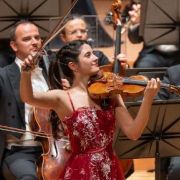
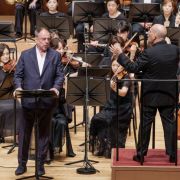
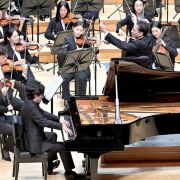
At Lotte Concert Hall, the KBS Symphony Orchestra marked 70 years as a witness to Korea’s classical music history. Masato Suzuki opened with Mozart’s Don Giovanni Overture. In 1962 the orchestra joined Korea National Opera for the work’s Korean premiere, lending the choice particular resonance. With tempo and balance cleanly judged, Suzuki preserved menace and theatrical spring in the measure an effective curtain-raiser required, clearing the hall’s acoustic space and refreshing the air before the concerto.

Musical agreement and pianistic realisation proved separate questions in Mozart’s Concerto no. 10 in E flat major for two pianos, K365. In the former, Yunchan Lim and Minsoo Sohn were almost perfect. Tempi, accents and phrase destinations coincided; exchanges never divided the music’s gaze. The Allegro moved naturally, neither swollen nor pressed. Lim could open high and Sohn continue below without breaking direction. Difference appeared in realisation. Lim gave every intervening note a function and causal pull, so the music seemed to generate itself before fingers or keys became perceptible. Sohn likewise sought to define contour, metrical centre and destination, but attacks and passagework shapes remained more audible as pianistic means. Sohn translated Mozart into the piano’s language; with Lim, instrument and music nearly merged.


In the spacious Andante, that difference became complementary. Lim’s line seemed like an existing song surfacing at the keyboard; Sohn supplied warmth, substance and a stable pulse. They delayed cadences without sentimental rubato, one decay becoming the other’s breath; slowness became listening space. The pianos stayed too present beneath the oboe melody, reducing its voice. As wind writing moved forward, private lament widened into darker communal sorrow. At the close, long-suspended sonority gently settled; gravity’s return brought pleasurable release.
The finale passed almost seamlessly from orchestra to pianos. At a quick tempo, rondo returns acquired new inflection and emphasis whenever leadership changed. Lim brought spontaneity; Sohn held the rhythmic and harmonic centre. Passagework flowed through the double cadenza without becoming display, and the final rush gathered every preceding exchange into one conclusion.
Suzuki set the opening Allegro con brio of Dvořák’s Eighth Symphony at a moderate tempo, giving the strings palpable weight without Brahmsian massiveness. The cellos’ G minor theme retained its dark gravity; flute birdsong restored motion naturally. The opening idea returned without heavy braking, binding pastoral episodes into a cyclic span. Wide dynamics gave the middle and closing tuttis real force.

The Adagio moved on a looser, meditative pulse, opening space between quiet strings and woodwind replies. Phrases remained distinct: their silences made the landscape advance stepwise, each vista arriving with deeper shadow and clearer outline. Structure became more visible, but dreamlike continuity occasionally broke. Forward tension thinned, the bass pulse remained. The violent episode sounded like unease thickening inside contemplation until it broke the surface.


Suzuki bound the waltz’s three beats into one circular motion, with even the central episode leaning towards the next pulse. The coda sprang out as if the dance had suddenly turned over. Nostalgia receded and the dance’s nerves quickened, though speed sometimes compressed the waltz’s graceful ease.
The finale regained breadth. The trumpet fanfare stayed unforced and the cello theme unfolded generously. Successive variations changed colour and mass, gathering heft by degrees until the coda’s charge became more startling. The reins released, the tempo rose sharply; brass and timpani tore through the orchestra’s polished surface, exposing ensemble edges without losing direction. The closing surge’s roughness marked no collapse of control, but the release of accumulated restraint in an exultant salute to the orchestra’s seven decades.