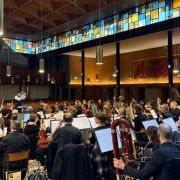
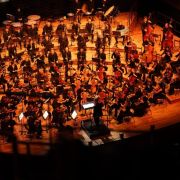
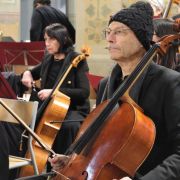
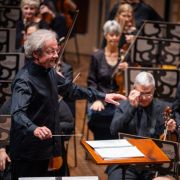
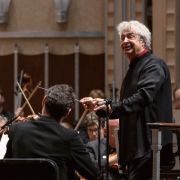
Manfred Honeck is among today’s foremost Brucknerians, a status cemented by the Bruckner Society of America awarding him the Julio Kilenyi Medal of Honor, presented to him during Saturday’s performance. Building on and refining an already distinguished tradition, he is the third Pittsburgh Symphony Music Director to receive this accolade, following in the footsteps of Fritz Reiner and William Steinberg. Honeck and the PSO musicians faced the supreme challenge of the Austrian composer’s marathon Eighth Symphony, with the performances being recorded for a future installment in their ongoing Bruckner cycle.


Ahead of the symphony was a work by Samy Moussa written on a PSO commission two seasons ago. Though based in Berlin, Moussa found inspiration for Adgilis Deda in the nation of Georgia. Literally “mother of place”, the title alludes to the Georgian deity revered as a protective spirit. A plaintive, resonant clarinet began, with the winds and low brass coalescing in such a way as to mimic the sound of the organ, making for an apt pairing with Bruckner. Blocks of sound reverberated with captivating beauty in a work that spoke with uncommon directness and urgency.
At 85 minutes long, Bruckner’s Eighth (presented in the familiar Nowak revision) occupied the bulk of the evening. In its mysterious beginnings, there was already wound-up tension, quickly amassing enormous gravitas. Outbursts in the brass were countered by arching melody in the strings, and under Honeck’s masterful sense of architecture, one felt he always knew exactly where the music was going – and why. Bruckner’s long-winded passages never felt bloated, but paced with forward propulsion. Climaxes in the broad first movement organically fell into place, only to close shrouded in the mystery with which it began, unresolved.


Taken at a brisk tempo, the Scherzo opened fleet and with light touch, building to brassy brilliance. A generous pause before the Trio gave room to breathe, introducing material marked by a gently undulating theme in the strings, decorated by the tinsel shimmer of the harps. The majestic Adagio took matters to spiritual heights, a vast journey in its own right. Amber brass chorales warmed the soul, strings and harp reached heavenward. The Wagner tubas in particular glowed with burnished solemnity in the movement’s great climactic arches.
A rapid crescendo to open the finale was perfectly judged, with soft beginnings erupting with blazing force in the blink of an eye. Certainly music that got one’s blood flowing, it sustained an epic, larger than life quality culminating in its transcendent final statement.