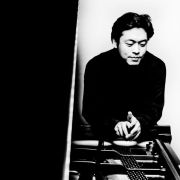
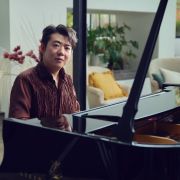
French pianist Alexandre Kantorow has had a remarkable rise in the past few years, capturing the gold medal in the 2019 edition of the International Tchaikovsky Competition aged 22, and being awarded the Gilmore Artist Award in 2024. Thursday night saw his Cleveland debut in a solo recital for an enthusiastic crowd at Severance Music Center. The repertoire alone was enough to grab the attention of any devotee of the piano literature, with some real rarities in the mix. Six composers were explored – all of whom were virtuoso pianists in their own right – in music not only of staggering difficulty, but lyric poetry.

The three large works on the program were at their essence journeys from darkness to light. Matters began with Bach, as obfuscated by Liszt in a massive set of variations on the cantata Weinen, Klagen, Sorgen, Zagen. Right from the beginning, Kantorow drew a vast, orchestral sonority from the piano with a commanding opening. Octaves thundered in the bass, retreating to a delicate presentation of the mournful theme, intricate and detailed in its counterpoint. The music crested to riveting intensity, culminating in a radiant, ecstatic chorale.


The biggest revelation of the evening came from Nikolai Medtner, an almost exact contemporary of Rachmaninov, who greatly admired him. Like Rachmaninov, he wrote in a stubbornly Romantic idiom well into the 20th-century, but in a remarkably distinctive voice. Despite being the first of Medtner’s 14 piano sonatas, the F minor sonata is a stunning masterpiece. Unsettled beginnings immediately drew one in to this rarefied sound world. Chords that resounded as tolling bells gave it a distinctly Russian flavor, and Kantorow navigated the dense textures with crystalline clarity. A sumptuously lyrical secondary theme was given with undulating accompaniment, a stark contrast to the ferocious development and the first movement’s chillingly tragic coda.
A brief, darkly-colored march preceded the magnificent Largo divoto slow movement. Quietly introspective at first, it swelled to enormous passions, melding without pause into the endlessly flowing stream of the finale. Razor-sharp contrapuntal passages traced the work’s lineage back to Bach, and a hard-earned victory was achieved in the sunny F major in which it closed.
The opening movement of Beethoven’s visionary final piano sonata (Op.111) was a study in concentrated power. Chilling rumbles in the bass erupted into Bachian counterpoint, clearly delineated even at speed and volume. The closing Arietta emerged like a wave of calm, a stately yet unassuming theme that blossomed to spiritual resonance. I’ve never heard anyone play the long sequences of trills quite like Kantorow did to almost mystical effect, leaving the audience spellbound. This was a masterful performance of a daunting work, showing a maturity beyond his years.


Before the Beethoven, Kantorow offered a trio of short pieces, beginning with Chopin’s Prelude in C sharp minor, warmly elegant and with wistful melancholy. Charles-Valentin Alkan is perhaps best known for his piano works conceived on a massive scale, but was also master of the miniature. Extracted from a set of 25 preludes, La Chanson de la folle au bord de la mer (The Song of the Madwoman at the Seashore) opened with an ominously tolling bass on which a simple melody far into the treble was superimposed. A climax burst forth, before fading away, as if lost at sea. The mystical realm of Scriabin’s Vers la flamme was utterly beguiling, in equal parts rapturous and terrifying.
In a single but substantial encore, Kantorow turned to the Liebestod (as transcribed by Liszt) from Wagner’s great love drama Tristan und Isolde, a work that also journeyed towards ecstasy for a powerfully majestic close.