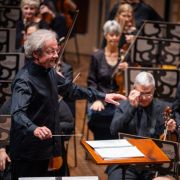
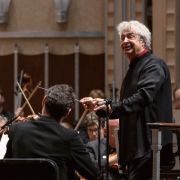
No part of Rafael Payare’s Friday night appearance with the Pittsburgh Symphony was for the faint of heart. The sheer volume of note-spattered pages, and the orchestral color and virtuosity demanded across the three works made for a lasting impression. The electric chemistry between conductor, orchestra and soloist ensured this wasn’t merely an exercise in bombast, but a night of compelling music-making, albeit with the volume cranked up to 11.

As a colorful opener, Payare introduced Pittsburgh audiences to Jimmy López’s 2012 work Perú Negro. Conceived in six interconnected dances, the work draws on Afro-Peruvian folk tradition, showing how African roots vividly fuse with Latin American character as refracted through the composer’s own lens. The work unfolds as virtually a continuous crescendo over its 17-minute duration, and makes use of an alluring array of nonstandard percussion instruments – including a massive thunder sheet hung from the ceiling. A call to attention in the brass opened and the skillfully scored material that followed radiated orchestral shimmer and ferocity. Payare’s animated conducting suited the music well, almost as if he was acting out what he wanted the musicians to deliver.


Among the great piano concertos, Prokofiev’s Second stands out as a particularly taxing and unrelenting affair. This weekend the daunting challenge fell to Yulianna Avdeeva. A gentle, unassuming opening belied its scope, with the piano grave and searching at first, gingerly exploring the keyboard ahead of the fury. Matters quickly grew in intensity, with Avdeeva drawing a wide color palette and deep resonance from the Steinway. The jagged edges of the massive cadenza resounded with enormous power and percussiveness.

The brief Scherzo flew by in a whirlwind with piano and orchestra in taut sync in this perpetual stream of nervous energy. The plodding footsteps that began the third-movement Moderato were subversive to the conventional slow movement, functioning more as a second Scherzo with its tongue-in-cheek gestures, stylishly conveyed by Avdeeva. Though punctuated by the occasional lyrical interlude, it was the cascading flourishes that won the day in the frenetic finale. In about the only moment of subtlety of the evening, the pianist encored with a limpid, elegant account of Schubert’s charming Moment musical no. 3 in F minor.
’Tis the season for Stravinsky’s Rite of Spring. The impossibly strained passage in the highest register of the bassoon began, given with piercing tension by Julia Harguindey – certainly a high mark in her first season as the PSO’s principal bassoon. The score’s labyrinthine lines were drawn out with clarity and inexorable forward momentum. The full fury of the work burst forth in the wild rhythms of The Augurs of Spring, delivered with thunderous precision. Pile-driving dissonances seemed to teeter on the edge of sheer chaos and cacophony, only to remain in tight control. Arresting as the double fortes were, the moments of silence and the eerie wisps of the desolate landscape that opened Part 2 also left a strong impact, though it was the chilling brutality of the final crash that was given the last word.