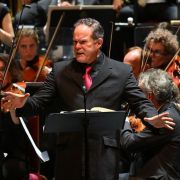
Alongside its concert programming, the Pärnu Music Festival runs a thriving programme of education and nurture named after its founding father and sons, the Järvi family. On 9th July, a shortlist of ten finalists (chosen from 21 participants) from the Järvi Academy conducting course held sway – along with their batons – at the grandly titled Järvi Academy Gala, in reality a public testing ground for the candidates.

The results won’t be announced until until next week, but all the participants received a single rose in recognition of their work, so everyone’s a winner. This, then, is not a regular concert review but a taste of what was, for better or worse, a fascinating experience, albeit one where the audience only witnessed the final piece in the puzzle. Paavo and Neeme Järvi had presided over the preliminary stages at a dry-run concert in Tallinn three days earlier, and they it was decided who should conduct which piece.


The least impressive participants fell short in a variety of ways, the most common arising from the slightly frustrating fact that the Järvi Academy Sinfonietta had rehearsed the music so completely that they could strike up their own plausible reading at the flick of a stick. As a consequence, it was interesting to watch a few would-be maestri slip into air-conducting, much as the rest of us might do when wearing headphones and wagging fingers, instead of moulding an interpretation of their own. Forgive me if I don’t name names.

High achievers were easy to pick out, and I’ll be surprised if these three musicians are not at least contenders for the top spot. The UK-based Italian Tania Mazzetti, who in her day job is the Principal Second Violin of the London Philharmonic Orchestra, opened the concert with a mature and cohesive reading of Arvo Pärt’s Für Lenart in memoriam, a typical example of the composer’s ‘tintinnabuli’ style that’s perfumed (intentionally or otherwise) by the mournful opening of Wagner’s Tristan und Isolde Act 3. Pärt’s ascetic momentum is a challenge for any conductor but Mazzetti carried it off impressively.
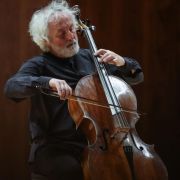
Gabriel Pernet, a fast-rising Swiss talent with a CV to die for (check his website!) drew the short straw in being allocated the evening’s sole concertante piece, an orchestration of the innocuous Prelude in G minor by this year’s featured composer, Heino Eller. Cellist Theodor Sink played it so assertively and stylishly that the conductor, who did an impeccable job in the circumstances, was left somewhat in the shade.


Benjamin Lerman of the USA, who took on the third movement of Schubert’s 6th Symphony, was an exciting podium presence despite having a number of technical flaws that may cost him the win (he sorely needs to lose the habit of jabbing a hectoring finger at the first violins!). Schubert’s Scherzo was perhaps the most challenging movement of the night for any conductor but on this showing I’d have happily listened to Lerman tackle the whole symphony.
Mark's press trip was funded by the Pärnu Music Festival