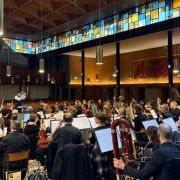
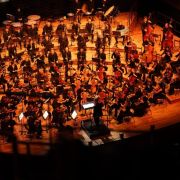
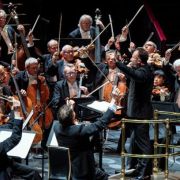
In Ticciati and the London Philharmonic Orchestra’s ‘Voices from Finland’, Sibelius’ Kullervo was preceded by Lotta Wennäkoski’s Zelo, commissioned by the LPO and receiving its world premiere.

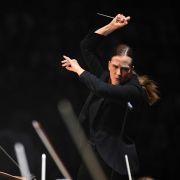
In Zelo, her companion to Kullervo, Wennäkoski takes ideas from the parent work, but the focus here is mostly on rhythmic energy. Percussion and piano drive the Introduction’s John Adams-like rhythms, while the mysterious Cradling is full of shimmering strings with more melodic woodwind lines. Zelo (Italian for zeal) follows, with strident crashes and slaps setting off the chase. Then it all goes rather slinky, with not one but two swanee whistles from either side of the stage (I hope the tuba player got a doubling fee) and sensuous slides from the orchestra. The lamenting mood is swept aside with the return of the opening’s energy, huge waves of sound building towards bright blasts and a sudden snap to finish. Ticciati steered the LPO with energy and panache, with tight ensemble from the strings, deft woodwinds and brass warmth.


After an early interval, attention turned to Sibelius. Kullervo’s fate in the Finnish national epic, Kalevala, is not a happy one. His tribe is massacred, he gets sold into slavery, escapes and loses his family. Then the girl he seduces turns out to be his sister. When all is revealed, she kills herself and, having exacted revenge on his enemy, Kullervo throws himself onto his own sword. A cheery tale all round then, but central to Finnish national culture, and Sibelius’ choice of this for his first major orchestral work was a bold political statement during the Finnish struggle for independence from Russia.
Ticciati and the LPO were on fine form, with rich, weighty strings, nimble woodwinds and warm brass. That weighty string sound occasionally made life hard for the woodwinds, although some deft stuttering articulation from the oboes broke through. The second movement had a throbbing lilt, with delicate filigree falls and trills from the violins and woodwinds. The clarinet and cor anglais took a moment to agree on tuning at one point, but otherwise Kullervo’s youthful energy prevailed.
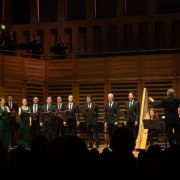
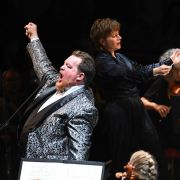
Shenyang (bass-baritone) and Miina-Liisa Värelä (soprano), as Kullervo and his sister respectively, added brief emotional interjections alongside the choir’s more detailed plot narration in the third movement. Sibelius relied on listeners’ knowledge of the Kalevala, so we only get a bit of the action in text – basically Kullervo’s seduction of his sister, and the subsequent discovery of their joint parentage. Shenyang’s rich and powerful voice delivered Kullervo’s lines with authority, whilst Värelä’s full-bodied tone gave suitable weight to the sister, and she delivered her more detailed and often rapid text with clarity.


The YL Male Voice Choir performed at Kullervo’s 1892 premiere, so it’s in their blood. They don’t have a huge amount to do musically, often singing in unison or octaves, but nevertheless have a lot of text to get through in their two movements, and I’m sure if I understood Finnish, I would have got every single word. When they did split, they produced a beautifully blended sound, and their pianissimo singing was impressive. Just occasionally in the tutti sections they were slightly overpowered by the orchestra – Ticciati did his best to balance this, but Sibelius did write some pretty weighty orchestral competition for the voices, and the soloists had the same problem, even from out front of the orchestra.
Ticciati was at his most expressive for the big finish finale, with funereal throbbing from the brass, and a phenomenal orchestral crescendo to the moment of Kullervo’s death, bringing a strong performance of Sibelius’ dramatic proto-symphony to an end.