A single golden leaf drifted towards the La Scala pit during the opening of Verdi’s Messa da Requiem, recalling the previous evening’s Faust, in which Méphistophélès scatters gold dust across the stage. Against the Requiem’s hushed beginning, this visual echo connected operatic spectacle with Verdi’s meditation on life’s transience.

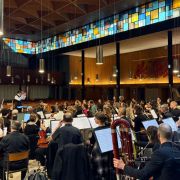
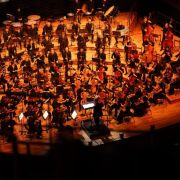
Riccardo Chailly’s deliberate restraint occasionally checked the music’s natural momentum. He began at a very slow tempo. The chorus’ barely pulsing lines seemed held in check, like powerful horses kept on a tight rein. The tension was palpable, though at times excessive. During the Kyrie, the music gathered the coiled energy of a panther preparing to spring; when the Dies irae erupted, the contrast was electrifying. The bass drum struck with terrifying force, while the brass combined weight with rounded sonority and finely controlled dynamics. The orchestra was a major strength, especially the colourful woodwind and brass, which clarified Verdi’s intricate orchestration.


Anna Netrebko, the evening’s most compelling vocal presence, led a distinguished quartet of soloists. She only performed the work for the first time in January (in Budapest). Her soprano has acquired a darker hue, giving Verdi’s score dramatic intensity, yet she resisted making every phrase monumental. In the Kyrie, supple legato balanced lyrical tenderness with dramatic force. Her pianissimi seemed almost mystical; elsewhere, moments of raw, hungry intensity came close to a curse. Some high notes lacked complete security, but her performance remained emotionally compelling.
The blend between Netrebko’s golden soprano and Caterina Piva’s mezzo-soprano was especially beautiful. Piva stepped in at short notice after Ekaterina Gubanova fell ill. Their voices merged in the Agnus Dei in an exceptionally gentle, almost timeless dialogue. Even their bodies seemed to move together as if dancing. The purity of their blend and the stillness of their phrasing made this one of the performance’s most moving moments. Piva’s vocal authority was not always sufficient to match the demands of the score, particularly in ensembles, but her diction was excellent, her sustained lines dignified and her dramatic instincts keen. Chailly’s visible support during their frequent interactions helped bring refinement to her performance.

Michele Pertusi brought warmth, a rounded tone and sensitive attention to the text. In the Mors stupebit, he seemed genuinely shaken by the prospect of judgement, though his mature voice did not always command the authority the music requires. Antonio Poli brought a distinctly Italian, spinto-like intensity to the Ingemisco, occasionally at the expense of lyrical subtlety. His Hostias lacked some of the otherworldly quality the music invites, but the four soloists formed a coherent ensemble.


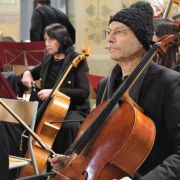
Expressive cello playing enriched the Offertorio, although its elongated phrases sometimes felt laboured rather than suspended in time. The Sanctus was buoyant but occasionally hurried; the Lux aeterna restored calm, its luminous vocal lines set against the chorus’ austere sonority. Chorusmaster Alberto Malazzi deserves credit for the chorus’s work.
In the final Libera me, Netrebko was almost mystical, at times raw and darkly intense. When the Dies irae was reprised, she turned towards the chorus as the threatening sound erupted, its terror all the more immediate in a Milan marked by unrest and shattered shop windows. At the close, she sang with her head thrown back, as if in prayer.
Chailly brought Verdi’s meditation on divine power down from abstract doctrine to lived experience. Against the backdrop of labour disputes at La Scala, the Requiem’s appeal to shared humanity resonated beyond the concert hall, finding its deepest expression in the fragile space between fear, faith and hope.