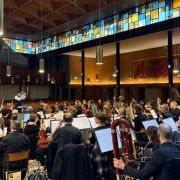
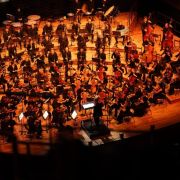
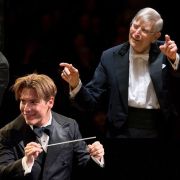
Verdi’s Messa da Requiem is often treated as an exercise in overwhelming force. Franz Welser-Möst’s reading with The Cleveland Orchestra at Carnegie Hall unfolded instead as a study in control and proportion, privileging long-range tension over visceral display. The work’s violence and supplication were not diluted but disciplined into an outline whose impact lay in its refusal to inflate emotion beyond the score’s demands.

The opening Requiem aeternam immediately set the performance’s tone. Strings hovered just above silence, the choral entry restrained yet firmly centred, denying any early sense of repose. The Dies irae that followed was fierce but tightly contained: bass drum and brass struck with exacting force, while the balcony-placed trumpets in the Tuba mirum sliced through the texture with chilling directness. Each return of the Dies irae stanza was carefully graded, so that the sense of terror grew not through shock but through build-up.


Across the work as a whole, Welser-Möst maintained a clear architectural grip. Tempos were firmly managed, yet flexible enough to accommodate the soloists without loss of momentum. The Cleveland Orchestra responded with sustained focus, maintaining balance even in the most densely scored passages. At peak volume, rhythmic articulation remained clear and orchestral textures sharply delineated, with contrast arising less from extremes of dynamics than from shifts in density and colour. In the subdued Lux aeterna, low winds and muted brass established a hushed, weight-bearing foundation, over which high strings and piccolo introduced a pallid, carefully rationed glow.
The chorus played a central role in defining the performance’s character. Prepared by Lisa Wong, it functioned not as a massed sonority but as a supple presence within the score. Diction remained lucid even at the softest dynamics, allowing the opening pages to register with heightened clarity, while later full choral eruptions carried weight without blare. In the eight-part fugal writing of the Sanctus, the contrapuntal density came across as both defined and transparent.
While ensemble coordination among the soloists was not always ideal, the performance was supported nonetheless by the individuality of each contribution. Closely integrated within Welser-Möst’s architectural conception, Asmik Grigorian resisted any temptation to turn the Libera me into an operatic summation. She treated it instead as an extended psychological arc, emphasising verbal urgency over vocal mass. Her opening entry was taut and exposed, the line held in deliberate check. In the climactic passages, she kept the tone focused and compressed, allowing intensity to accumulate. After the final Dies irae subsided, her re-entry registered as fragile and unsettled, sharpened by Welser-Möst’s transparent orchestral balances.


Mezzo-soprano Deniz Uzun was wonderful throughout, delivering the Liber scriptus with calm authority. Her line remained firmly centred, her diction clear and her expression free of exaggeration while sustaining steady expressive weight. In the exposed octave duet of the Agnus Dei with Grigorian, she matched timbre and pitch with notable precision, their austere combined sound floating above the dark sonority of strings and woodwinds.
Tenor Joshua Guerrero brought a warm, evenly produced tone to the Ingemisco. Of the four soloists, his high register was the most overtly operatic, tempered by a sotto voce delivery that remained notably restrained. Bass Tareq Nazmi provided a sober foundation, his Mors stupebit notable for its unforced gravity and dark-hued focus; in the Confutatis, his declamation carried weight without forcefulness.
In a performance that emerged not as a spectacle but as a work of unrelenting questioning, doubt, fear and supplication were allowed to coexist. The closing pages did not dissolve into calm so much as thin into silence. What remained was a sense of exposure and mystery, not resolution.