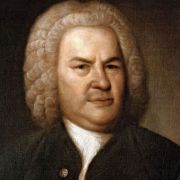
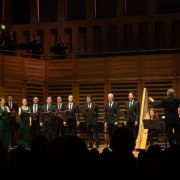
Was Johann Sebastian Bach “the beginning and end of all music” as Max Reger put it? Well, for the town councillors of Leipzig charged with appointing a new Thomaskantor to replace Kuhnau, not so much. Bach was not on their shortlist, and nine or so others were considered before he entered the frame. So why did they appeal to the panel so much more? Was Bach just less known, or were they actually better composers (shock, horror!)? To explore this, the Academy of Ancient Music’s principal oboist and Research Fellow, Leo Duarte, with director Laurence Cummings presented ‘The Chosen One’, including works by six of the candidates, mostly their original audition offerings. Let the competition (or as Cummings put it, Leipzig’s Got Talent) begin!


They ended with (spoiler alert) the winner, Bach’s Cantata BWV23. Soprano Rowan Pierce and alto Helen Charlston wound their lines together beautifully with the lilting oboes, with Charlston in particular growing from nothing on long notes to emerge out of the texture. Tenor Nick Pritchard’s recitative was tender yet with the communicative immediacy now familiar from his Evangelist performances in the Passions. And when joined with Pritchard, bass Ben Kazez delivered their busy duetting with perfect clarity.
But what of the competition? Georg Philipp Telemann was the frontrunner, but ultimately Hamburg’s salary raise was too tempting. His Cantata has a graceful, dancing mood, despite its weeping and wailing text. And herein perhaps lies one of the attractions for the recruiting panel, the ability to produce music more immediately accessible than the intensity, even profundity of Bach’s settings. A graceful flute opening leads into an alto aria, and Charlston lamented where Telemann allowed, but equally danced through the incongruously lightly set “How deserted lies the city”. More clear-focussed recitative from Pritchard, righteous shaking from Kazez, and gentle trotting from Pierce, against stunningly virtuosic filigree from flautist Rachel Brown, was rounded off with a passionate Chorale.
In between was Johann Friedrich Fasch’s energetic Concerto for Flute and Oboe, a welcome contrast to the choral works, although Fasch withdrew from the Leipzig process, perhaps because he thought it was a done deal for Telemann. Brown and Duarte were a delight, mixing perfectly judged expression with deft virtuosity.


The evening began with Christoph Graupner’s richly celebratory cantata, Lobet den Herrn alle Heiden. A great opener, although the triumphal brass risked drowning the singers in places. Nevertheless, the choruses were joyful, and Charlston’s aria duetting with Duarte was a joy, as was Pritchard’s ‘weighing balance’ aria, with its ups and downs and rapid coloratura. From Christian Friedrich Rolle we had sections from his St Luke Passion, with Pritchard suitably declamatory as the Evangelist, and Kazez authoritatively weighty as Jesus. Pierce got her chance to shine here with great drive and edge, particularly relishing “mörd’rische”, but also sudden changes of mood, switching focus to Jesus’ mercy, accompanied by effective crying violins. And finally, there was Georg Friedrich Kauffmann with some of the most expressively set music. A mournful opening, with violins and oboes imitating each other, set an expressive tone, and Charlston’s following recitative was moodily dark, save the outburst of flourish on the word “Freud”, matched later by Kazez’s explosive “Freuden”.
Cummings directed from the harpsichord with clarity and energy, and the players performed with sensitivity, dexterity and affection for the music throughout. And the winner? Well, Bach got the job, but on the basis of tonight’s performances, there was a case to be made for all the candidates. History is on the side of Bach, with Telemann having more of a moment of late, but the AAM certainly made us consider what might have been, had another candidate been ‘The Chosen One’.