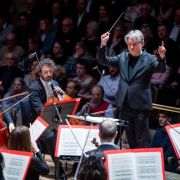
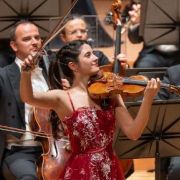
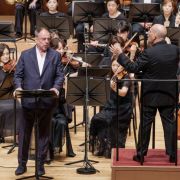
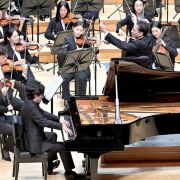
At Seoul Arts Center, Sakari Oramo, the BBC Symphony Orchestra and Yeol Eum Son gave a concert whose strengths lay in clarity of line and exact timing. Mendelssohn’s The Hebrides was lean and serious, its counterpoint opened by agile strings and keen woodwind articulation, the tidal pull audible beneath the surface. Yet some joins did not fully lock, and the development’s drive into the coda relaxed just when the span needed its final surge.

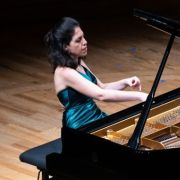
Britten’s Piano Concerto found Son and Oramo at their most alert. In the Toccata, she held together toccata velocity and sonata breadth with unusual command. Within Britten’s finely broken phrasing, she picked out the structurally accented notes inside each phrase and used them to reveal a larger line, so the movement’s headlong motion still traced a clear arch. The sound was lucid, the pedal generous enough to bind without blur, and the cadenza – glissandi included – released the movement’s stored charge in a sudden flare.


In the Waltz’s development, Son resisted the temptation to harden Britten’s irony into sharp percussive fracture. She built the paragraph through controlled dynamic gradation, a long linear crescendo in which each phrase added weight and acoustic density. The piano drew the music into a broader symphonic swell. At the crest, she let that pressure thin away by degrees, so the sudden Vivace ma tranquillo entered in a chill, suspended light. Only the ending, which should already cast a shadow toward the Impromptu, felt more cut than transformed.
In the Impromptu, Son kept the six variations within one field of feeling, yet the larger span remained slightly loose: the passacaglia logic was clear, but the movement did not always seem drawn toward a single destination, and denser contrapuntal layers could briefly cloud. What stayed memorable was the pianissimo—projected to the back of the hall, with core intact and pedal bloom that never turned opaque. The attacca into the March changed the air at once. Oramo and Son created real depth of field, as if the procession were approaching from a distance, and Son preferred kinetic thrust to mass. The orchestra tracked her smallest inflections with chamber-like vigilance. The earlier dream-logic gave way to something colder and more exposed.
Oramo’s reading of Brahms’’Second Symphony refused unsophisticated pastoral ease. The first movement unfolded in one broad paragraph, low strings firm on the floor, inner parts unusually clear, the string grain slightly rough but entries exact and dynamics finely shaded. After the development, the return of the second subject in the recapitulation sounded deepened rather than simply restated. Woodwinds were excellent; the horns occasionally spread at the edge of attack. The Adagio kept its pulse and dignity. Oboe and horn solos rose from within the strings’ breathing line; a few transitions wanted more suppleness, yet the movement’s inward cantabile never sagged. The Allegretto grazioso caught the right Ländler inflection, lightly sprung and carefully balanced, with the lower strings doing quiet, exact work beneath the oboe’s poised opening.


In the finale, Oramo trusted accumulation. Energy banked across the symphony found release in recapitulation and coda alike, and the close arrived with hard-won inevitability. This was not a Brahms Second of plush surfaces or easy sunshine. A few rough seams remained, especially in the horns and in certain transitions, yet the performance had conviction, proportion and real inner life. Warmth, here, felt earned rather than applied.