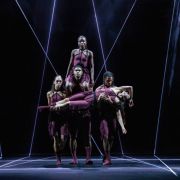
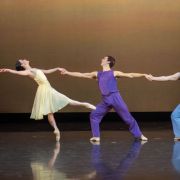
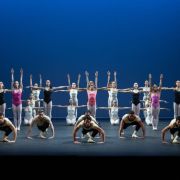
The Royal Ballet celebrated two mid-century classic one-act ballets, created on either side of the Atlantic Ocean: Jerome Robbins’ Dances at a Gathering (1969) and Kenneth MacMillan’s Song of the Earth (1965).

This double bill – both works are 65 minutes in duration – was brought together under the title Visionaries, a fitting description for both innovative choreographers. MacMillan’s vision of creating a ballet on Das Lied von der Erde was so ahead of its time that the concept of setting a ballet to Mahler’s music was not welcomed by the Royal Opera House and its world premiere was exiled to Stuttgart Ballet.
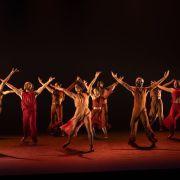
Both works are defined by pure dance and musical excellence. Neither has any set design to speak of, both rely on simple costumes and coloured backdrops, and the lighting hardly changes in either ballet, just fading to dark between movements in Song of the Earth. Both have been performed around a hundred times each by The Royal Ballet and this familiarity is clear in the standard of dancing throughout the casts, with excellent continuity stretching to those making their debuts in challenging roles.


The musical excellence in this programme was significant. There is no mention of Leonardo Pierdomenico in the programme for the simple reason that until one working day prior to the performance, he was not due to appear. He replaced Robert Clark at short notice to perform the eighteen pieces by Fryderyk Chopin, mostly mazurkas and waltzes, that comprise the marathon of solo pianism that the work requires. One can only marvel at the intensity of this challenge and Pierdomenico gave an extraordinary and compelling performance.
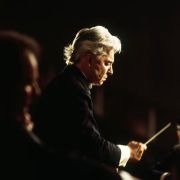
Das Lied von der Erde is reliant on the two voices that alternate songs across the six movements of Mahler’s song cycle, described as a symphony when published in 1909. Mezzo soprano, Beth Taylor, and tenor, John Findon, were excellent although it was a struggle for me to hear Findon with clarity above the orchestra in the first song. Koen Kessels conducted the Royal Opera House Orchestra with great emotional sensitivity.

The programme opened with Robbins’ masterpiece, which mixes classical ballet with a sense of American theatricality exemplified over the eighteen dances, beginning with a wistful soliloquy danced tenderly by Marcelino Sambé before progressing through several permutations of duets, trios and mixed groups of dancers. I’ve always been slightly amused by the work’s title since it is not until the end that all ten dancers appear as a “gathering”. Prior to that they all come on stage individually or as a duo, trio etc. The gathering must be happening somewhere offstage! If I have a criticism then it is that Robbins seemed to run out of ideas towards the end of the marathon, for example by bringing incongruous bunny hops into the movement.

Pastel colours identify each of the ten dancers (Sambé is the Brown Boy, for example). Robbins insisted that the dance did not represent any story although one can detect many emotions in the dancers’ various interactions. Of special note was the whimsical duet between Anna Rose O’Sullivan (Apricot) and Joseph Sissens (Green) and the dreamy flow inherent in Lauren Cuthbertson’s Green Girl solo. Reece Clarke was a powerful presence in purple; Luca Acri (Brick) returned successfully to a piece that he danced just after the pandemic; Yasmine Naghdi (Pink) and Mayara Magri (Mauve) were both delightful in their many and varied contributions; and Harris Bell and Leticia Dias made impressive debuts as the dancers in blue.


Song of the Earth requires an immense emotional depth in performance, and it was clear that these dancers had reached deep within to find the necessary expressiveness. As the central woman figure, Marianela Nuñez floated soulfully through MacMillan’s choreography with continuous and always elegant movements, not least in criss-crossing the stage with the long and distinctive sequence of bourrées in the sixth song.

The ever-present reminder of mortality came through William Bracewell’s Messenger of Death. Having been mesmerised by Carlos Acosta’s performance in this role in past revivals, I would not have seen Bracewell as an ideal choice for Death’s postman, but he proved me wrong with a suitably sinister and predatory performance in this strange life and death take on the eternal triangle. Patricio Revé completed the lead trio as the man stalked by death. A superb supporting cast included a quick return for Magri, plus Sae Maeda, Marianna Tsembenhoi and Caspar Lench.
I had a slight sense of déjá-vu when approaching this double bill and realised that it is not the first time that Robbins and MacMillan have been combined in a Royal Ballet programme since Song of the Earth was paired with Robbins’ Afternoon of a Faun and In the Night (a sequel to Dances at a Gathering) back in 2015. Their choreographic choices bear little similarity, but they clearly go together well!