‘Timeless’ is the sub-text to this well-timed celebration of Marianela Núñez, one of the world’s most acclaimed ballerinas who has graced The Royal Ballet with her distinctive artistry since 1998. Timeless is apt but so many other adjectives would serve equally well; how about flawless, peerless, matchless to name but three.

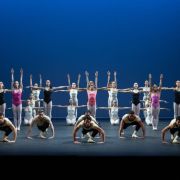
The programme was expertly crafted to display the diverse range of Núñez’s multifarious talents and those of dancers close to her. Two one-act ballets opened and closed the schedule with a middle act comprising five divertissements. It was a choreographic playlist of the modern greats from either side of the Atlantic – Ashton, Balanchine, MacMillan, McGregor, Robbins and Wheeldon – with a nineteenth century warhorse thrown into the mix. There was, perhaps thankfully, nothing new to get our heads around and if I had one passing regret it might have been the absence of Liam Scarlett on that roster. Perhaps he didn’t live long enough to join those greats but his career as a choreographer was closely inter-linked with Núñez.


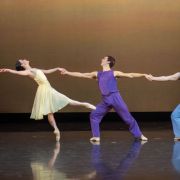
Counter-intuitively in a programme devoted to her, the curtains didn’t open on Núñez and instead it was Fumi Kaneko and Vadim Muntagirov who first appeared as the young lovers in Robbins’ starlit romance, In the Night, a kind of sequel to Dances at a Gathering. Mayara Magri and Lukas B. Brændsrød performed as the second couple before Núñez and Matthew Ball took the stage. Appropriate to the starlight backdrop, the dance is performed to four Chopin nocturnes. It is a lyrical, floating work, sequenced in three distinctive duets (playful, sophisticated and passionate) followed by a finale of interplay between the three couples, exiting and re-entering the stage in a manner that suggests their movement continues unseen in the wings.

The curation of the programme had musicians at its heart with Kate Shipway’s piano playing key to In the Night. Shipway returned to play Arvo Pärt’s Spiegel im Spiegel for Wheeldon’s beautiful After the Rain, alongside Robert Gibbs’ violin; and Robert Clark performed Franz Liszt’s piano solos throughout Marguerite and Armand. It’s important to acknowledge that the evening’s success owed much to these outstanding musicians and the Royal Ballet Sinfonia under the baton of Paul Murphy.

A comparison with The Royal Ballet’s Prima Ballerina Assoluta, Dame Margot Fonteyn, is inevitable since two of the works performed will always be associated with her. Firstly, the pale blue backdrop to Le Corsaire pas de deux immediately brings to mind the 1962 film of Fonteyn and Nureyev dancing the same choreography. Muntagirov made a quick return to partner Núñez and stunned the audience with his tempered virtuosity. Fonteyn was 43 years-old at the time of that film; Núñez is a year older now and with no disrespect to the memory of the greatest ballerina that has graced the company, today’s star ballerina seems still at the height of her powers, suggesting with every performance that her best is yet to come.


The second of Fonteyn’s ballets now revisited by Núñez was Marguerite and Armand, created by Ashton for Fonteyn and Nureyev in 1963 and danced by no one else in their lifetimes. I confess that, whilst recognising its historical significance, it is not a favourite of mine: I dislike the skeletal wooden set, I can’t understand why none of Marguerite’s admirers, not least the unnamed Duke, who is serially humiliated by Armand, have the courage to challenge this puppyish interloper and, worst of all, it seems sadistic to say the least for him to throw Marguerite around in the death throes of her consumption for the sake of a pas de deux! Nonetheless, I recognise that the performance is a rite of passage for any serious Ashtonian ballerina and Núñez brings all her artistic maturity to bear on this most expressive of roles. William Bracewell was an exceptionally lyrical Armand.

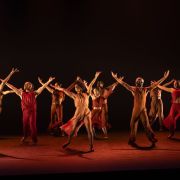
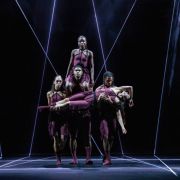
The four remaining divertissements that followed the Corsaire pas de deux were the duet from Infra, originally created on Núñez and Edward Watson and danced here with great sensitivity by Akane Takada and Calvin Richardson; the ubiquitous balcony pas de deux from MacMillan’s Romeo And Juliet, danced with such sizzling chemistry by Magri and Ball that it felt completely fresh and alive; the After the Rain pas de deux performed mesmerisingly by Kaneko and Brændsrød; and finally a rip-roaring burst of ebullient virtuosity in Balanchine’s Tchaikovsky Pas de Deux, danced by Núñez with her latest partner, Patricio Revé.
Núñez will have had at least a hundred men lifting her through her 28 years with The Royal but choosing Ball, Muntagirov, Revé and Bracewell as her partners for this auspicious celebration seemed just right.
This memorable evening of music and dance celebrated both an extraordinary dancer and the company that has nurtured her development and will, hopefully, continue to do so for more years to come because here is a prima ballerina still in her prime.