Bachtrack logo
Agenda
Critiques
Articles
Actualités
Vidéo
Site
Jeunes artistes
Voyage

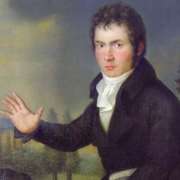
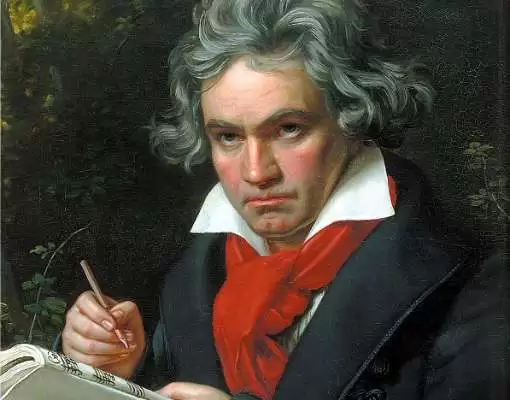
Ludwig van Beethoven (1770-1827)

Find Beethoven events around the world
Loading image...
© Public domain
Fichier de données
Année de naissance1770
Année du décès1827
NationalitéAllemagne
ÉpoqueRomantique
Top Reads
Profile

German composer whose forceful creative personality has made him perhaps the most universally admired and recognised figure in classical music history.

Born the son of a musician at the Electoral court in Bonn, he showed early talent as a pianist and composer, and after an encounter with Haydn in 1792 was invited to study with him in Vienna. There he made his name at first as a virtuoso pianist noted for his bold improvisations, and by the end of the century had composed two piano concertos, and several piano sonatas and chamber works involving piano. His First Symphony appeared in 1800, and in 1801 he published his first set of six string quartets (Op.18).

It was around this time that his progress as a composer was threatened by hearing problems, and although it would be more than a decade before he suffered total deafness, the crisis reached an emotional peak in 1802 when he expressed in a letter known as the ‘Heiligenstadt Testament’ his thoughts of suicide. Having decided to carry on, his personal victory over adversity was seemingly mapped in the outline of his Third Symphony of 1804 (the Eroica, or ‘Heroic’), a powerful journey through darkness to light that would be undertaken again in works such as the ‘Appassionata’ Piano Sonata (1805), the opera Leonore (1806, revised as Fidelio in 1814), and the Fifth Symphony (1808).

Yet Beethoven’s music was not always about heroic struggle. It could show bluff humour (as in the Eighth Symphony or the Piano Sonata, Op. 31 No. 3), calm serenity (the slow movement of the ‘Hammerklavier’ Piano Sonata, Op. 106), exuberant energy (the finale of the String Quartet, Op. 59 No. 3) or the warm affection of friendship (the Piano Sonata.Op. 81a, ‘Les Adieux’). The Sixth Symphony (the ‘Pastoral’) expresses a Romantic love of nature, while works such as Fidelio and the Ninth Symphony (1824) articulate a burning belief in personal freedom and brotherhood.

Beethoven’s deafness made him increasingly isolated in his last decade, and his work became more introspective, first in his last three piano sonatas (Opp. 109-111), and then in his last five string quartets (Opp. 127, 130, 131, 132 and 135), in which we encounter a new composure, a sense of being at peace and achieving an understanding of the nature of things reflected in music of cosmic stillness and depth. Beethoven’s achievements as a composer include taking the High Classical style inherited from his two great predecessors, Mozart and Haydn, and stretching it to new formal limits, in instrumental music especially. But it is his expressive ambition, and his triumphant realisation of it, that have won him a place among the greatest of all creative artists.

Profile © Lindsay Kemp 2025

Liste des œuvres
12 Variations sur Ein Mädchen oder Weibchen, Op.6612 Variations sur un thème de Judas Maccabaeus de Haendel, WoO 4515 Variations et fugue pour piano en mi bémol majeur dites « Variations Eroica », Op.3532 variations sur un thème original en ut mineur pour piano, WoO 8033 'Variations Diabelli' pour piano en ut majeur, Op. 1206 Bagatelles for piano, Op.126Adagio HammerklavierAh! perfido, Op.65Aria "Prüfung des Küssens", WoO 89Bagatelle for piano, Op.119 no.10Bagatelle pour piano en la mineur "À Elise", WoO 59Concerto pour piano et orchestre en ré majeur, Op.61aConcerto pour piano et orchestre no. 1 en ut majeur, Op. 15Concerto pour piano et orchestre no. 2 en si bémol majeur, Op. 19Concerto pour piano et orchestre no. 3 en ut mineur, Op. 37Concerto pour piano et orchestre no. 4 en sol majeur, Op. 58Concerto pour piano et orchestre no. 5 en mi bémol majeur «l'Empereur», Op.73Concerto pour violon et orchestre en ré majeur, Op. 61Coriolan, ouverture, Op. 62Cycle de Lieder 'An die ferne Geliebte', Op.98Duo pour alto et violoncelle « mit zwei obligaten Augengläsern », WoO 32Egmont (ouverture et musique de scène), Op.84Egmont, Op.84: OuvertureFantaisie en ut mineur pour piano, chœur et orchestre («Fantaisie chorale»), Op.80FidelioFidelio, Op. 72: OuvertureFidelio, Op.72: Ha, welch ein AugenblickFugue for String Quintet in D major, Op.137Grosse Fuge - fugue pour quatuor à cordes en si bémol majeur, Op. 133Grosse Fuge arranged for piano (4 hands), Op.134Kakadu Variations, Op.121aMeeresstille und glückliche Fahrt (Calm Sea and Prosperous Voyage) for chorus, Op.112Messe en ré majeur "Missa solemnis", Op.123Oratorio "Christus am Ölberge" (Le Christ au Mont des Oliviers), Op.85Ouverture: Les Créatures de Prométhée, Op. 43Ouverture: Léonore I, Op. 138Ouverture: Léonore II, Op. 72aOuverture: Léonore III, Op. 72bPiano Quartet in E flat major, Op.16Quatuor à cordes no. 1 en fa majeur, Op.18 no.1Quatuor à cordes no. 10 en mi bémol majeur, «Les Harpes», Op.74Quatuor à cordes no. 11 en fa mineur, «Serioso», Op.95Quatuor à cordes no. 12 en mi bémol majeur, Op.127Quatuor à cordes no. 13 en si bémol majeur, Op.130Quatuor à cordes no. 13 en si bémol majeur, Op.130: CavatineQuatuor à cordes no. 14 en ut dièse mineur, Op.131Quatuor à cordes no. 15 en la mineur, Op.132Quatuor à cordes no. 16 en fa majeur, Op.135Quatuor à cordes no. 2 en sol majeur, Op.18 no.2Quatuor à cordes no. 4 en ut mineur, Op.18 no.4Quatuor à cordes no. 5 en la majeur, Op.18 no.5Quatuor à cordes no. 6 en si bémol majeur, Op.18 no.6Quatuor à cordes no. 7 en fa majeur, «Razoumovski», Op.59 no.1Quatuor à cordes no. 8 en mi mineur, «Razoumovski», Op.59 no.2Quatuor à cordes no. 9 en ut majeur, «Razoumovski», Op.59 no.3Quatuor à cordes, Op.130, avec Grosse Fugue, Op.133Quintette pour piano et vents en mi bémol majeur, Op.16Quintette à cordes en ut majeur, Op.29Romance pour violon et orchestre no. 1 en sol majeur, Op.40Romance pour violon et orchestre no. 2 en fa majeur, Op.50Rondino en mi bémol majeur, WoO 25Rondo Capriccio en sol majeur pour piano "Colère contre un sou perdu", Op.129Sept Bagatelles pour piano, Op.33Septuor en mi bémol majeur, Op.20Sonate pour cor en fa majeur, Op.17Sonate pour piano et violon no. 10 en sol majeur, Op.96Sonate pour piano et violon no. 2 en la majeur, Op.12 no. 2Sonate pour piano et violon no. 3 en mi bémol majeur, Op.12 no. 3Sonate pour piano et violon no. 4 en la mineur, Op.23Sonate pour piano et violon no. 5 en fa majeur « Le Printemps », Op.24Sonate pour piano et violon no. 8 en sol majeur, Op.30 no. 3Sonate pour piano et violon no. 9 en la majeur, « à Kreutzer », Op.47Sonate pour piano no. 1 en fa mineur, Op.2 no. 1Sonate pour piano no. 11 en si bémol majeur, Op.22Sonate pour piano no. 13 en mi bémol majeur « quasi una fantasia », Op.27 no. 1Sonate pour piano no. 14 en ut dièse mineur « au Clair de lune », Op.27 no.2Sonate pour piano no. 14 en ut dièse mineur « au Clair de lune », Op.27 no.2: Adagio sostenutoSonate pour piano no. 15 en ré majeur, Op.28Sonate pour piano no. 16 en sol majeur, Op.31Sonate pour piano no. 17 en ré mineur «La Tempête», Op.31 no.2Sonate pour piano no. 18 en mi bémol majeur « La Chasse », Op.31 no. 3Sonate pour piano no. 19 en sol mineur, Op.49 no. 1Sonate pour piano no. 2 en la majeur, Op.2 no. 2Sonate pour piano no. 20 en sol majeur, Op.49 no. 2Sonate pour piano no. 21 en ut majeur «Waldstein», Op.53Sonate pour piano no. 22 en fa majeur, Op.54Sonate pour piano no. 23 en fa mineur «Appassionata», Op.57Sonate pour piano no. 24 en fa dièse majeur « À Thérèse », Op.78Sonate pour piano no. 26 en mi bémol majeur « Les Adieux », Op.81aSonate pour piano no. 27 en mi mineur, Op.90Sonate pour piano no. 28 en la majeur, Op.101Sonate pour piano no. 29 en si bémol majeur «Hammerklavier», Op.106Sonate pour piano no. 3 en do majeur, Op.2 no. 3Sonate pour piano no. 30 en mi majeur, Op.109Sonate pour piano no. 31 en la bémol majeur, Op.110Sonate pour piano no. 32 en ut mineur, Op.111Sonate pour piano no. 4 en mi bémol majeur, Op.7Sonate pour piano no. 5 en do mineur, Op.10 no. 1Sonate pour piano no. 6 en fa majeur, Op.10 no. 2Sonate pour piano no. 7 en ré majeur, Op.10 no. 3Sonate pour piano no. 8 en do mineur «Pathétique», Op.13Sonate pour piano no. 9 en mi majeur, Op.14 no. 1Sonate pour violoncelle et piano no. 2 en sol mineur, Op.5 no. 2Sonate pour violoncelle et piano no. 3 en la majeur, Op.69Sonate pour violoncelle et piano no. 4 en ut majeur, Op.102 no. 1Sonate pour violoncelle et piano no. 5 en ré majeur, Op.102 no. 2Symphonie no. 1 en ut majeur, Op.21Symphonie no. 2 en ré majeur, Op.36Symphonie no. 3 en mi bémol majeur « Eroica », Op.55Symphonie no. 4 en si bémol majeur, Op.60Symphonie no. 5 en ut mineur, Op.67Symphonie no. 5 en ut mineur, Op.67: Allegro con brioSymphonie no. 6 en fa majeur « Pastorale », Op.68Symphonie no. 7 en la majeur, Op.92Symphonie no. 8 en fa majeur, Op.93Symphonie no. 9 en ré mineur, Op.125Symphonie no. 9 en ré mineur, Op.125: Finale – Ode à la joieSymphony no. 3 in E flat major "Eroica", Op.55: Marcia FunebreTrio avec piano en si bémol majeur «Gassenhauer», Op.11Trio avec piano no. 1 en mi bémol majeur, Op.1 no. 1Trio avec piano no. 2 en sol majeur, Op.1 no. 2Trio avec piano no. 3 en ut mineur, Op.1 no. 3Trio avec piano no. 5 en ré majeur « Les Esprits », Op.70 no. 1Trio avec piano no. 6 en mi bémol majeur, Op.70 no. 2Trio avec piano no. 7 en si bémol majeur «à l'Archiduc», Op.97Trio in E flat major, Op.38Trio à cordes en sol majeur, Op.9 no. 1Triple Concerto pour violon, violoncelle, et piano en ut majeur, Op.56Variations en ut majeur sur Là ci darem la mano de Mozart’ s Don Giovanni, WoO. 28Violin Concerto movement in C major, WoO 5