Reports of opera's demise have been exaggerated of late and if the art form is to continue to provide careers for new artists, then learning to laugh at itself is not a bad way to adapt and survive.

Elena Langer is on just such a mission to bring more humour to contemporary opera. The Russian-born British composer, whose Figaro Gets a Divorce was a hit for Welsh National Opera, has said, ‘I want to do something funny, something sarcastic’ and so here we are, with the premiere of the chamber version of her 2010 Four Sisters, a Gianni Schicchi–Chekhov mash-up, in which the daughters of an immigrant Russian tycoon assemble in New York for the reading of their father’s will. Note to daughters: if the hotel maid is quoting Nabokov – or it may be Updike, she’s not sure – there is more to her than meets the eye. It’s just one of the brilliant touches in John Lloyd Davies’s deliciously intelligent libretto that riffs on whoever’s idea it was that “America is a vast conspiracy to make you happy.”


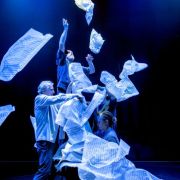
Langer’s eclectic, audacious score, conceived to reflect the cultural diversity of the USA, delights and surprises from curtain up, beginning with a hectic flourish that’s like being plunged into Stravinsky’s Shrovetide fair without an order of events. The grieving daughters are badly hungover in a fancy hotel function room where they and the coffin with their dear Papa in it eagerly await the arrival of the gloriously monikered lawyer, Krumpelblatt (Sam Hird). Where there’s a will there’s a regrettable lapse in decorum and, thanks to Langer’s rollercoaster writing, we plunge headlong into the daughters’ avarice in series of full-throttle trios, pausing here and there for set pieces as each sister in turn dreams of being anywhere but the dreaded Moscow.

As an unstoppable Masha, Madeline Robinson goes bossa nova in her desire to see the parrots of the Caribbean and Ellen Pearson’s expressive, languid Irina longs for the sunshine of California. Though sometimes uncertain with the text, Jingwen Cai’s huge and velvety mezzo voice had its best outing of the evening as Olga playing to her strengths as a physical performer. Densely chromatic motifs drive the sisters’ gathering desperation like an engine as they repeatedly phone home “I don’t know how much...” When the fourth sister finally reveals herself – and her claim to the fortune – her touching paean to Daddy is accompanied by a swanee whistle.
Peggy Wu and Talia Stern proves themselves a dream team in this piece. Conducting the Britten Sinfonia, Wu made full dramaturgical sense of Langer’s welter of themes and imitations. Stern’s direction reveals a mastery of comic timing, and the discipline of her dynamic choreography results in superb performances across the cast.

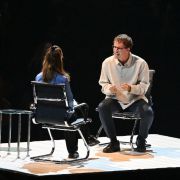
Langer’s is the third opera in this all-female triple bill, ‘Tales of Love and Loss’, a showcase for The Royal Opera’s Jette Parker Artists. Elizabeth Maconchy’s 1961 The Departure, in which Julia (Ellen Pearson) watches from her bedroom window as a crowd gathers below for a funeral which she comes to realise is her own. Pearson’s rich, mature voice is cleverly cast as one half of a long marriage, and well suited to the elastic range that Maconchy’s writing demands. A little more dynamic sensitivity from the pit and greater nuance in the direction on stage would have better helped Pearson navigate this psychologically underwritten but frenetic role. The score does takes a breath however at the arrival of the grieving Mark, and Sam Hird’s poignant, lyrical baritone was a welcome revelation.


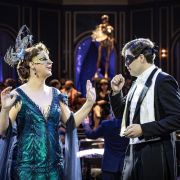
Hird was the fall-guy again in Charlotte Bray’s Making Arrangements, adapted from an Elizabeth Bowen short story in which poor sap Hewson receives a request from his wife, Margery, to send on her clothes. Quite what Margery – soprano Hannah Edmunds in deliciously femme fatale mode – will do with them all is unclear, as she has herself made other arrangements with an American called Leslie (Giorgi Guliashvili) who lounges about in a dressing gown and sock suspenders. Bray’s score is sparse and angular, making much of the interplay between solo instruments: the harp is a prominent feature. Meanwhile Ana Ines Jabares-Pita’s design recreates the queasy world of Bowen’s interiors and it’s a good job that Edmunds was vocally and dramatically more than a match dramatically for Margery’s alarming eyeshadow and turban combination. Librettist Kate Kennedy capitalises on the absurd aspects of this most mundane of dramatic situations: “I suppose you want me to give away the dogs” rings a bathetic death knell for marital relations.