If you search the excellent archive on the Musikverein’s website, you can find the playbill for the concert replicated here by the Orchestra of the Age of Enlightenment. It was a matinee by the Vienna Philharmonic on Sunday 7th March 1897, conducted by Hans Richter. On the bill: Brahms’ Fourth Symphony, Dvořák’s Cello Concerto and Haydn’s Symphony no. 73 in D major. The concert’s significance? It was the last concert Johannes Brahms attended, his final public appearance. Within a month, he was dead.

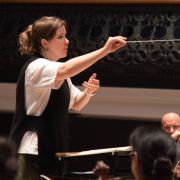
With that mood dampener forming the concert’s raison d’être, one might have expected the OAE’s performance of Brahms’ final symphony to have a valedictory air. That would be to reckon without Maxim Emelyanychev, who conducted the springiest, least lachrymose account ever. The excitable Russian, hair flapping, maintained energy throughout, the opening – ponderous in many hands – full of pulsing vitality. Intonation wasn't always precise, but the intention was never in doubt.


The Andante moderato second movement flowed swiftly and, with garrulous woodwinds, the Allegro giocoso bubbled along merrily. There was rigour to the finale’s Passacaglia, laid out cogently, but also allowing space, as in the serene flute solo (Lisa Beznosiuk) in Variation 12, for the music to breathe. Clear-eyed and urgent, this was a suitable reminder that Brahms was only 52 when the symphony premiered in 1885, with little sense of a closing chapter.
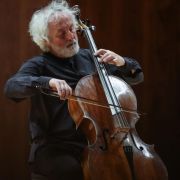
It was Steven Isserlis’ idea to suggest this programme to the OAE, the closing concert of their 40th anniversary season (the celebrations continue throughout the year) and he was the featured soloist in Dvořák’s nostalgic concerto. Brahms was a great supporter of the younger composer. “Today you will hear a real piece!” he apparently declared to his companion Josef Gänsbacher as they headed to the Musikverein.

The joy of hearing this concerto played on period instruments in a medium-sized venue like the Queen Elizabeth Hall was that the cello didn’t have to fight to make its voice heard. With extravagant bow flourishes, Isserlis lent an improvisatory air to the virtuosic first movement, the OAE revelling in its grandiose contributions.
Bosky woodwinds created cooling glades – especially welcome on the hottest June day on record in the UK – for Isserlis’ reflective playing in the peaceful Adagio. The theme where Dvořák self-quotes a favourite song of his sister-in-law, Josefina Kaunitzová, gravely ill when he was writing the concerto, was full of ardent lyricism. The melancholy of the first two movements was thrown off ebulliently in the dance-like rondo finale. When Brahms had played through the piano accompaniment at home a year earlier, he is reported as having said, "If I had known that it was possible to compose such a concerto for the cello, I would have tried it myself!" If only.


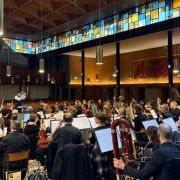
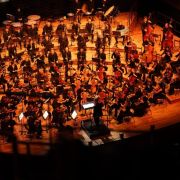
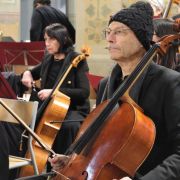
At the end of the 19th century, performances of Haydn wouldn’t have deployed the smaller forces the composer had at Eszterháza a century earlier, so here the OAE played with the full complement of 38 strings they had used for the rest of the concert. A different type of “historically informed” performance, but one still full of style and wit.
Hans Richter knew what he was doing, closing the concert with the Haydn (most programmers today would reverse the running order). After three amiable movements, the finale depicts a hunt (hence the subtitle “La Chasse”), with rollicking horns, a wild timpani riff (Adrian Bending) and one of Haydn’s false endings designed to trick the audience into premature applause. Mission accomplished. I wonder if Brahms and the rest of the Musikverein audience were similarly gulled.