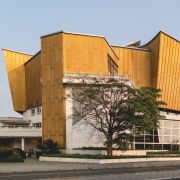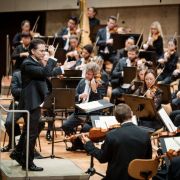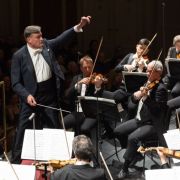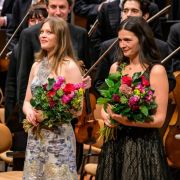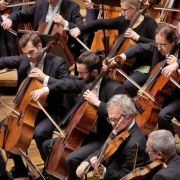


The Viennese Classics are by no means strangers to the concert hall, but after so much meaty Romanticism on the Berliner Philharmoniker’s menu so far this season, a programme of Haydn and Mozart – with light Mendelssohnian starter in the form of his genial Calm Sea and Prosperous Voyage overture – felt refreshing. But with Maxim Emelyanychev as conductor and pianist, plus the playing of Yun Zeng – principal horn with the orchestra since 2024 and here making his solo debut with them – it was much more that that: this one of the most purely enjoyable and invigorating concerts I’d heard in some time.

On record, Emelyanychev’s performances of the Romantics have occasionally sacrificed richness of sound to clarity. Here too he encouraged a period approach from the Philharmoniker in the Mendelssohn. The calm surface of its atmospheric introduction was undisturbed even by the ripples of string vibrato. But as the voyage got underway, such period manners were counterbalanced by the players’ tonal sheen and power. The effect – brilliantly maintained throughout the concert – was bracing and invigorating.


For Mozart’s Horn Concerto no. 4 in E flat major, Emelyanychev directed from a harpsichord as Zeng stepped into the limelight. The quality of the young horn player – still only 27 – has been obvious from any number of this orchestra’s concerts over the last two seasons, and, despite a couple of early signs of nerves, this was playing that married an impossibly sweet tone to impossibly smooth legato and apparently effortless passagework. The only bum note was an anachronistic first-movement cadenza. But there was no arguing with the jazzy encore – a tour de force of swagger, swing and extended techniques.
Anachronism was centre stage at the start of the second half, too, in the form of a handsome seven-octave Erard. This was not exactly what one might have expected as the “Hammerflügel” advertised in the programme, but in Haydn’s D major Piano Concerto it proved a canny compromise between fortepiano and fully fledged Steinway, holding its own against the orchestra in this big hall. We heard its mellow tone immediately as Emelyanychev strolled on with the orchestra and gave us an improvisatory flourish before launching straight into a performance of irresistible wit and ebulliance.

But both here and in the superlative performance of Haydn’s Symphony no. 104 in D major that followed, there was never a sense of the music being unnecessarily or wilfully pulled about, only of its rhetorical effect presented in full. In the symphony, in particular, the conductor was careful to distinguish between moments of assertion and those of interrogation and answer, between playfulness and seriousness.


The first movement’s Adagio introduction, begun before the applause had even finished, was weighty and imposingly theatrical, the subsequent Allegro athletic and exhilarating. The Andante was recast as a drama of uncertainty, its often fractured gestures emphasised to powerful effect. The Menuetto was purposeful and vibrant, its pauses calculated to keep us on our toes – when the last elongated pause was interrupted by a cough, one quick glance from Emelyanychev was enough to integrate it into the interpretation. The finale, despatched at breakneck speed, was joyous roller coaster.
Haydn’s grander symphonies can often feel too safe with modern orchestras, their edges too often smoothed over. Here, though, one was able to imagine some of the thrill that the first audience must have felt at the work’s premiere in London back in 1795. A rousing conclusion to a terrific concert.