New York City is currently going through a bitter cold spell. Winds are gusting, streets are icy and more snow is forecast for this weekend. Yet at the end of New York City Ballet’s winter season opener, the feeling in the theater was one of warmth. The program was well-danced and engaging from start to finish.

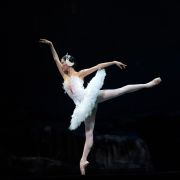
George Balanchine’s Serenade is a fool-proof ballet. The curtain rises on the 17 corps members and the audience is always under a spell. Waltz Girl is one of Sara Mearns’ best roles. When she entered in her grand jeté, she threw her head back and flung her arms dramatically. Her sense of drama can overwhelm some ballets, but it is fitting here, as a common interpretation of Serenade is that the Waltz Girl dies of heartbreak and ascends to heaven. Megan Fairchild was making her farewell to the jumpy Russian Girl (she is retiring this spring). Her speed and precision are still impressive. Emilie Gerrity was cool and mysterious as the Dark Angel. Her invisible promenade was so smooth that it garnered spontaneous applause.


The next night, Mira Nadon made her NY debut as Waltz Girl. She was less overtly dramatic than Mearns, but more luminous and otherworldly. Beautiful final backbend. This is a ballet that can take different interpretations.
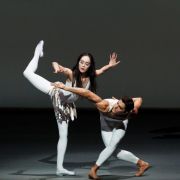
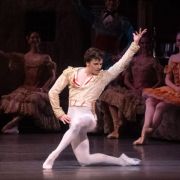
Balanchine’s Prodigal Son, unlike Serenade, is a surprisingly fragile work. It can look kitschy and dated with the wrong dancers. The two casts I saw had polar opposite interpretations. The first night’s cast (Anthony Huxley and Miriam Miller) are cooler dancers. Huxley was naive rather than rebellious. He looks like a choir boy. His jump is powerful though. Miller as Siren used her long arms and legs to emphasize the bizarre geometric shapes of the duet.

The second night’s cast (Daniel Ulbricht and Sara Mearns) were much more veristic. Mearns stomped onstage almost angrily and dramatically squatted. Ulbricht was petulant and agitated from the jump. Both Huxley and Miller turned out when dancing, both Mearns and Ulbricht made the seemingly conscious decision to turn in.
Alexei Ratmansky’s Paquita was clearly meant to push the Petipa-like technique of the company. It is an adaptation from his Paquita reconstruction for the Bayerisches Staatsballett (there is a video on YouTube for the curious). For New York City Ballet, Ratmansky has only set the grand pas classique and also gave the company rather streamlined, modern-looking tutus by Jerome Kaplan. Last season, the ballet was presented with Balanchine’s Minkus Pas de Trois. It was an awkward fit. That has now been axed.

NYCB often looks out of sorts in pure Petipa ballets. Ratmansky is known as a demanding taskmaster in rehearsals, and he managed to make the company look almost classical (as opposed to neoclassical). The upper bodies are still too spiky, without the rounded épaulement that is considered ‘proper’ classical technique. The corps was ragged. The famous diagonal of corps girls at the opening of the ballet had noticeably mismatched arms and shoulders. But the dancers now know how to pose purposefully between steps, rather than simply barreling through.


There are four variations in addition to the pas de deux for the main couple. The different dancers adapted to the Petipa style in different ways. Ashley Hod (first night) cleaved through space in the jumping solo. In the ‘Cupid’ variation, both Emma Von Enck (first night) and Alexa Maxwell (second night) captured the cheeky humor of the steps. Kloe Walker (second night) was a last minute substitute for an injured Naomi Corti and had the flexible back, sharp turns and winning personality. Domenika Afanasenkov (both nights) had the most understated solo, but was maybe the best at recreating the sloping shoulders and soft arms of true Petipa style.

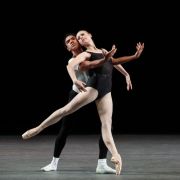
The two lead couples were both excellent. On the first night, Mira Nadon had an old-Hollywood glamor and a showy technique. She has powerful saut de basques and cabrioles. In the coda, she wowed the crowd with backwards hops on pointe in arabesque, which she capped with a big arabesque penché. Her partner Chun Wai Chan was more of a skilled partner than a virtuoso dancer on this occasion. On the second night, Isabella LaFreniere’s performance was regal and authoritative, if without Nadon’s wow factor. Ryan Tomash had great elevation in his rond de jambes and a naturally showy style. The audience ate it up.