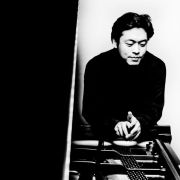
In a way, the most surprising thing about watching Víkingur Ólafsson close up in recital is how little there is to watch. Most of the power with which he strikes the keys comes from his fingers, less from the wrists and hardly any from arm movement. When his upper body occasionally sways to follow the mood of the music, the forearms and wrists seem stock still: it’s an uncanny effect of quietness in motion even when he plays torrents of notes in Beethovenian Sturm und Drang.

The economy of movement – and his pedal work is similarly understated – gives Ólafsson precision control over the shape of every note, most particularly the attack and release, which he uses to delineate each note from the others. Thus, the listener hears every component of the music with crystalline clarity, whether it’s a main theme, a secondary theme in counterpoint with it, a shaped accompaniment or the individual notes which, when put together, form a rumbling bass. And that clarity permits him to generate expressivity. Quite simply, Ólafsson takes me to places that other pianists can’t.


This recital was the latest of a tour in support of his current album. He has already done the rounds of Germany and five other European countries before arriving here at the Philharmonie de Paris. The fact this was the fifth time in a week that he has played the same programme seems to have had no adverse effect on its freshness.
The programme is all based on the keys of E (mi in French), with major key pieces bookending three works in the minor. The opening Prelude from Book 1 of The Well-Tempered Clavier may only have lasted 90 seconds, but that was enough to take me into a wave of Bachian bliss, its closing E major blending seamlessly into the E minor that opens Beethoven’s Piano Sonata no. 27, whereupon the series of shifting emotions began in earnest: from an opening that matched the calm of the Bach, we moved through stress, through elegance, more stress and finally optimism. This is the pianist as storyteller, leading us by the hand through the progress of the composer’s state of mind.
And indeed, it’s hard to avoid using the cliché of a musical journey to describe a recital in which so much attention has been paid to one work leading naturally into the next – even from composers as different as Bach and Schubert. Bach’s Partita no. 6 demonstrated Ólafsson’s qualities to a T – smooth flow, clean bass notes and carefully calibrated dynamics of the Allemande gave way to a powerful fugal section in which every introduction of a subject came as a delicious surprise; the ensuing Courante was gossamer delicate. The brilliance of the closing Gigue, followed by the softest of endings, led perfectly into the genteel melancholy of Schubert’s Sonata in E minor, D566, with the dynamics ebbing and flowing until the storm’s eruption, and the main theme entrancing every time it returned.


The journey closed with Beethoven’s Piano Sonata no. 30, with its serious levels of angst and the power of its Prestissimo section followed by the chain of variations that is the third movement: slow lovely octaves in the first, quicksilver passagework in the second, and eventually a radiation of joie de vivre for the close.
A generous set of four encores spanned the ages from Bach to Glass – the last starting as Ólafsson was only half-seated on his stool – a bit of let-your-hair-down showmanship to follow all that concentration and intensity.